
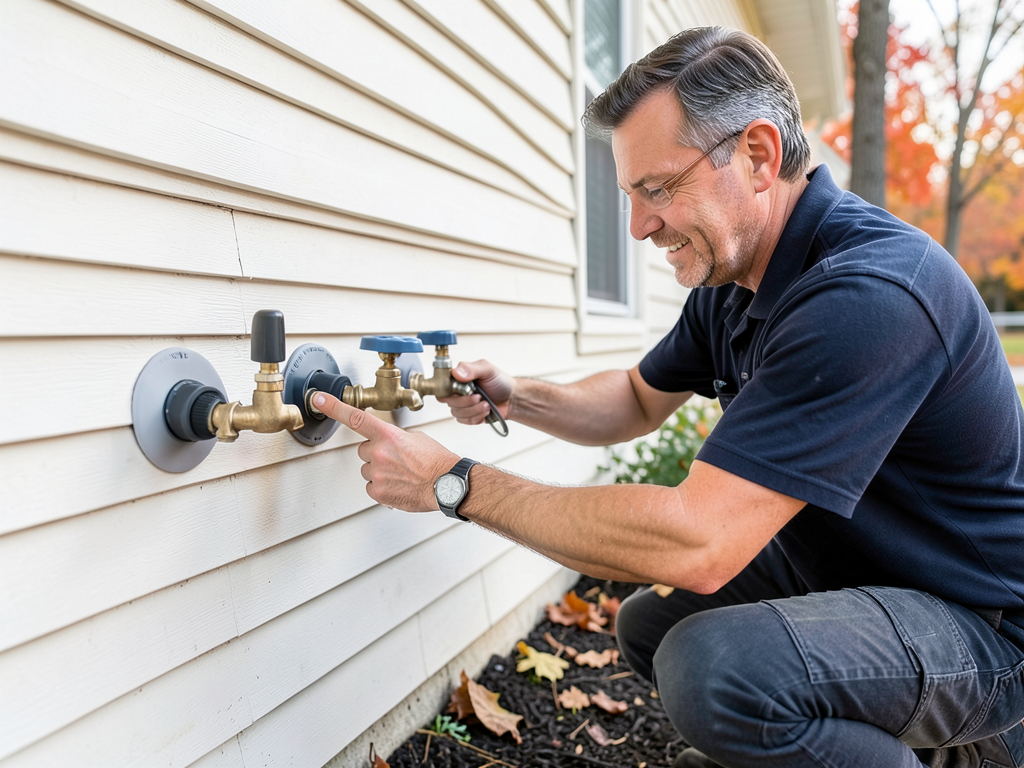
Protecting Your Outdoor Faucets from the Next Central Texas Deep Freeze in Georgetown
Central Texas winters can surprise even longtime residents. While Georgetown rarely sees extended freezing weather, the 2021 Winter Storm Uri proved that a single cold snap can cause thousands of dollars in plumbing damage. The good news is that protecting your outdoor faucets takes just a few hours and costs less than a restaurant dinner. This guide shows you exactly how to winterize your outdoor plumbing before the next deep freeze hits Williamson County. Georgetown Water Utility.
Why Georgetown Homes Are Vulnerable to Freeze Damage
Georgetown’s location in the Texas Hill Country creates unique freeze risks. The area’s blackland clay soil shifts dramatically with temperature changes, and many homes built in the 1990s and early 2000s have shallow water lines that sit just below the surface. Unlike northern states where pipes run deep beneath frost lines, Central Texas plumbing often runs through exterior walls or uninsulated crawl spaces. When temperatures drop below 28°F for more than four hours, trapped water in these pipes can freeze and expand, causing splits that won’t show until the thaw. Dealing with Central Texas Hard Water – The Best Water Softener Systems for Steiner Ranch Homes.
The Georgetown Water Utility reports that freeze-related service calls spike after every hard freeze, with most damage occurring to hose bibs that homeowners thought were protected. Many Georgetown residents discover too late that their frost-free sillcocks actually require annual maintenance to function properly. Water Heater Maintenance Tips.
Tools and Materials You’ll Need
Before you start, gather these supplies from your local hardware store. Most Georgetown homeowners can complete this project with basic tools and under $50 in materials.
| Item | Purpose | Estimated Cost |
|---|---|---|
| Insulated faucet covers | Creates air barrier around spigot | $8-15 each |
| Foam pipe insulation | Wraps exposed pipes | $2-5 per 6-foot section |
| Heat tape (optional) | Adds electric warming for extreme cold | $15-25 per 6-foot section |
| Adjustable wrench | Loosens stubborn fittings | $10-20 |
| Utility knife | Trims insulation to fit | $5-10 |
Step 1: Disconnect Hoses and Splitters
Start by removing every garden hose, pressure washer connection, and splitter from your outdoor faucets. Even the best insulated cover cannot protect against freeze damage if a hose holds water against the spigot. Water trapped in a connected hose expands when frozen, creating pressure that splits the faucet from the inside out.. Read more about Fixing That Annoying Drip with Faucet Repair and Replacement Services in Wells Branch.
Drain the hoses completely and store them in your garage or shed. If you have underground irrigation lines, this is also the time to shut off the main irrigation valve, typically located near your water meter. Professional Drain Cleaning Services to Clear Stubborn Clogs in South Congress Apartments.
Step 2: Locate and Turn Off Interior Shut-off Valves
Most Georgetown homes have interior shut-off valves for outdoor faucets, usually located in the garage, utility room, or near the water heater. These valves control water flow to exterior spigots and are your first line of defense against freeze damage.
Turn the valve clockwise until it stops. If you cannot find a dedicated shut-off valve, your home may have a manifold system where all outdoor lines connect to a central control. In this case, you’ll need to shut off the main water supply temporarily.
Step 3: Drain the Remaining Water
Once the water is off, open the outdoor faucet to allow any remaining water to drain. If your faucet has a bleeder valve on the interior shut-off, open it now. This small cap releases trapped water from the line. Place a bucket underneath to catch the drainage.
Leave the outdoor faucet slightly open after draining. This prevents pressure buildup if any water remains and allows for expansion if freezing occurs.
Step 4: Install Faucet Covers
Slide the insulated cover over the faucet and tighten the drawstring or secure the clips according to the manufacturer’s instructions. The cover should fit snugly against the house wall with no gaps. For added protection, wrap the exposed pipe with foam insulation before installing the cover.
Georgetown hardware stores like McCoy’s Building Supply and Home Depot stock covers specifically designed for Texas freeze conditions. Look for models with R-values of at least 7 for adequate protection.
Standard Hose Bibbs vs. Frost-Proof Faucets
Understanding which type you have determines your winterization approach. Standard hose bibbs have the valve exposed to the elements, while frost-proof sillcocks place the valve inside the wall where it stays warmer.
Standard Hose Bibbs: These require complete winterization including draining and covering. They’re common in homes built before 2010.
Frost-Proof Sillcocks: These have a long stem that places the actual valve 10-12 inches inside the wall. However, they still require annual maintenance. The rubber washer inside can degrade, and the vacuum breaker can trap water that freezes.
To identify your faucet type, look at the handle orientation. Frost-proof models typically have handles that point downward when off, while standard models have handles parallel to the wall.
Emergency Tips: What to Do If Your Faucet Is Already Frozen
If you discover a frozen faucet before completing winterization, act quickly but carefully. Never use an open flame or propane torch to thaw a frozen pipe. This creates fire hazards and can cause steam explosions that split pipes violently.
Instead, use a hair dryer on the low setting or wrap the pipe with hot towels. Start from the faucet end and work toward the interior shut-off. If you hear cracking sounds or see water leaking inside walls, shut off the main water supply immediately and call a licensed plumber.
Georgetown’s building code (based on the International Plumbing Code with local amendments) requires that all new construction use frost-proof sillcocks in exterior walls. However, many existing homes still have standard models that need extra protection. Plumbing San Marcos.
Protecting Backflow Preventers and Irrigation Systems
Georgetown’s hot summers mean many homes have underground irrigation systems that require winter protection. The backflow preventer, typically a brass assembly near your water meter, is especially vulnerable to freeze damage.
Turn off the irrigation system’s main valve and drain the backflow preventer by opening the test cocks with a flathead screwdriver. Cover the entire assembly with an insulated bag or blanket, securing it against wind.
For sprinkler systems, most Central Texas homeowners can skip professional winterization since hard freezes are rare. However, if you have a system with above-ground pipes or valves, consider having it professionally blown out with compressed air before the first freeze.
Frequently Asked Questions
When should I winterize my outdoor faucets in Georgetown?
Monitor weather forecasts starting in mid-November. Georgetown typically sees its first freeze around late November or early December. Winterize when temperatures are predicted to drop below 32°F for more than 4 hours.
Do I need to drip my outdoor faucets during a freeze?
Dripping outdoor faucets wastes water and provides minimal protection. Instead, focus on proper insulation and shutting off interior valves. If you choose to drip, do it from an indoor faucet on an exterior wall to keep water moving through vulnerable pipes.
How much does it cost to repair a burst outdoor faucet?
Repair costs typically range from $150-400 depending on the damage extent. A simple washer replacement might cost $75, while replacing a split pipe in a wall can exceed $500 when you factor in drywall repair and repainting.
Can I use heat tape on my outdoor faucets?
Yes, but only use heat tape rated for outdoor use and follow manufacturer instructions carefully. Never overlap heat tape or cover it with insulation that could cause overheating. Heat tape works best when combined with insulated covers for extreme cold events.
Local Resources and Professional Help
Georgetown homeowners can find supplies at local hardware stores including McCoy’s Building Supply on South Austin Avenue and the Home Depot on Williams Drive. Both locations stock Texas-specific freeze protection products.
For professional winterization services, call (737) 316-0588 to schedule an inspection before the next freeze. A licensed plumber can identify vulnerabilities specific to your home’s construction and ensure all exterior plumbing meets current Georgetown building standards.
The Georgetown Water Utility also offers free home plumbing assessments for residents concerned about freeze vulnerability. Contact their customer service department to schedule an appointment. Plumbing Pflugerville.
Final Checklist Before the Next Freeze
- Disconnect all hoses and splitters
- Locate and turn off interior shut-off valves
- Drain remaining water from lines
- Install insulated covers on all outdoor faucets
- Protect backflow preventers and exposed pipes
- Monitor weather forecasts for freeze warnings
Taking these simple steps now can save you thousands in repair costs and prevent the stress of emergency plumbing calls during freezing weather. Georgetown’s climate may be mild most of the year, but when arctic air does arrive, your plumbing needs to be ready.
Don’t wait until the last minute. Call (737) 316-0588 today to schedule your plumbing inspection and ensure your home is protected before the next Central Texas deep freeze hits Georgetown. For more information, visit 2021 International Plumbing Code with Texas Amendments.
You may also find this helpful. Is PEX Really Better than Copper for a Bouldin Creek Plumbing Remodel?.