
Zebra mussels are causing serious plumbing problems for homeowners across Austin’s lakefront communities. These invasive freshwater mollusks first appeared in Lake Travis in 2017 and have since spread throughout the Highland Lakes chain. When these tiny organisms enter your home’s water system, they create clogs, reduce water pressure, and can even cause that unpleasant rotten egg smell coming from your taps. Plumbing San Marcos.
For Lakeway residents living near Lake Travis, the threat is particularly real. Zebra mussels reproduce rapidly and their microscopic larvae, called veligers, can pass through standard water intake screens. Once inside your pipes, they attach themselves to surfaces and begin building colonies that restrict water flow and damage your plumbing infrastructure. Water Heater Maintenance Tips.
Understanding how zebra mussels affect your home’s water system is the first step toward protecting your property. These invasive species don’t just impact large municipal water facilities – they’re now a growing concern for residential plumbing in Austin’s lake communities. Plumbing Pflugerville.
How Zebra Mussels Enter Your Home’s Water Lines
Zebra mussels spread through several pathways that affect Austin homeowners. The primary route is through municipal water intake systems that draw from infested lakes like Lake Travis and Lake Austin. These facilities cannot completely filter out the microscopic veligers, which are less than 0.3 millimeters in size.
Once the water enters the distribution system, these larvae travel through the network of pipes until they reach individual homes. Lakeway properties near the lake shore are especially vulnerable because they’re closest to the source of infestation. The mussels can also enter through private lake intakes used for irrigation systems or through backflow prevention devices that fail to catch the tiny larvae.
Water pressure fluctuations in your home can actually help zebra mussels establish themselves. When pressure drops, the larvae can settle and begin attaching to pipe walls using their byssal threads. Within weeks, they develop their characteristic striped shells and start reproducing, with a single female producing up to one million eggs per season.
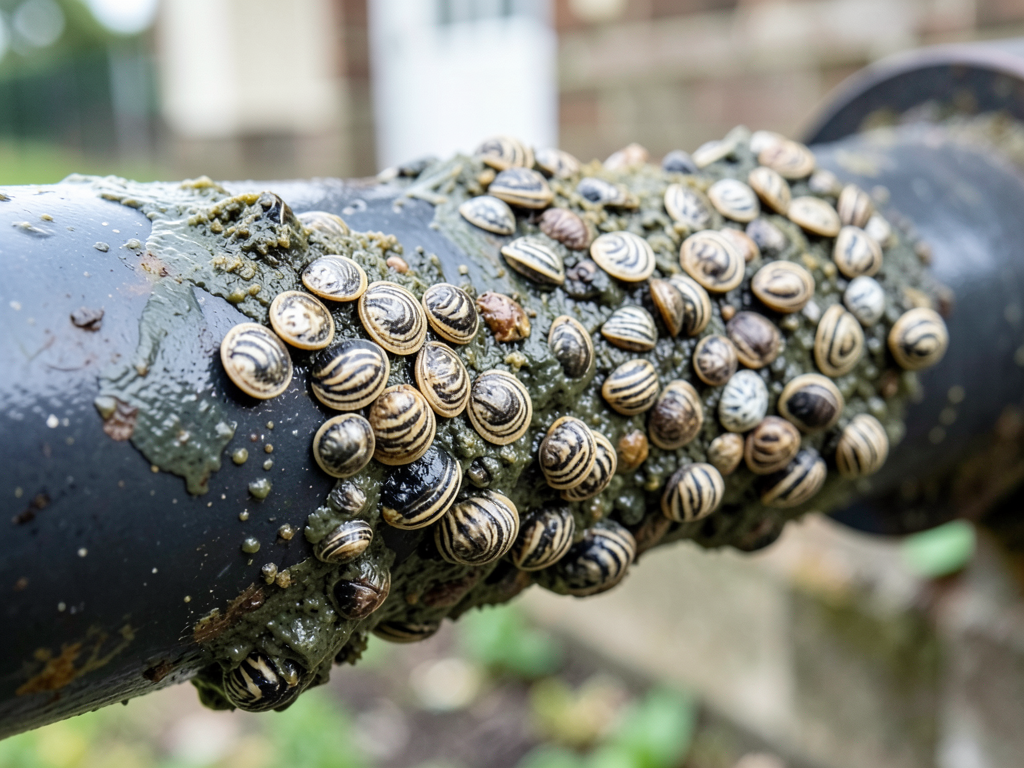
– Close-up photograph showing zebra mussel colonies clogging a residential water pipe, with visible shell patterns and biofouling buildup
Signs of Infestation: Low Pressure and Persistent Odors
Homeowners in Lakeway and surrounding areas should watch for several warning signs that indicate zebra mussel infestation in their plumbing. The most common symptom is a gradual decrease in water pressure throughout the home. This happens because the mussels build up inside pipes, reducing the internal diameter and restricting flow.
Another telltale sign is a persistent rotten egg or fishy odor coming from your taps. This smell occurs when zebra mussels die and decompose inside your pipes, releasing sulfur compounds and other byproducts. The odor is often strongest in the morning when water has been sitting in the pipes overnight.
You might also notice unusual sounds in your plumbing system. As water flows past mussel colonies, it creates a distinctive rattling or clicking noise that wasn’t present before. This sound is caused by the shells of dead mussels breaking loose and moving through the pipes.
Water discoloration is another red flag. When large numbers of mussels die and decompose, they can release pigments and organic matter that tint your water brown, yellow, or even slightly green. This is different from the rust-colored water caused by corroded iron pipes.
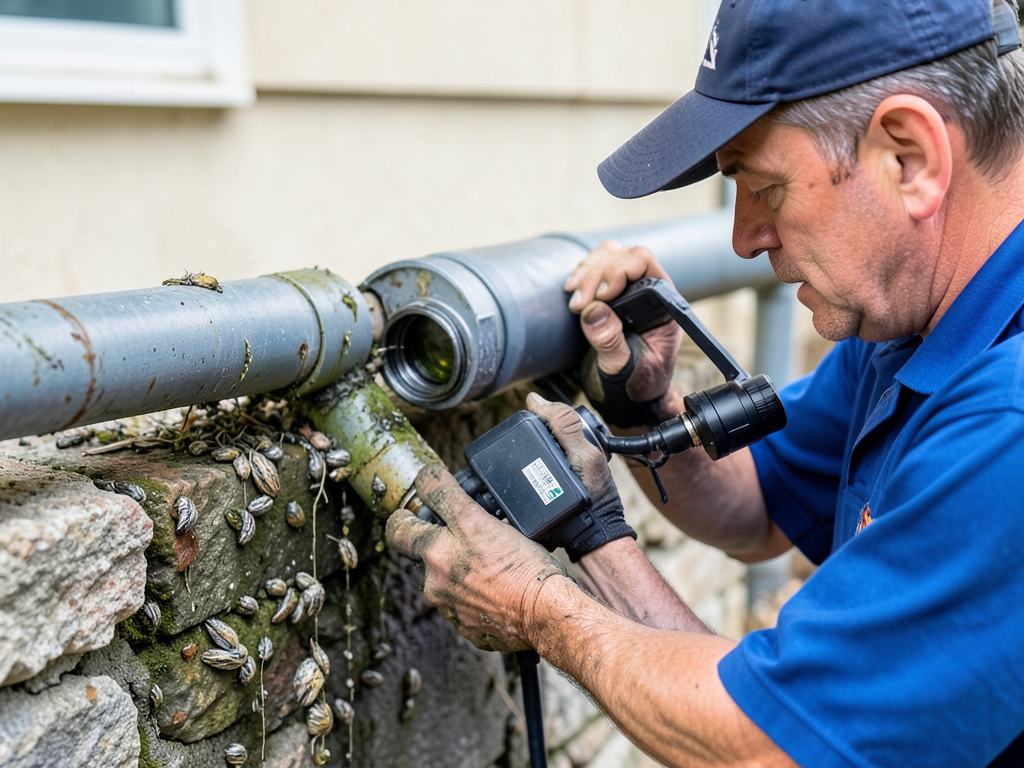
– Technician using a borescope camera to inspect a residential water line showing zebra mussel buildup and restricted flow
The Damage Factor: How Invasive Species Corrode Austin Pipes
Zebra mussels cause damage through multiple mechanisms that affect both the functionality and longevity of your plumbing system. The most obvious impact is the physical restriction of pipe diameter. A moderate infestation can reduce water flow by 30-50 percent, forcing your water heater and appliances to work harder and increasing your utility bills.
The mussels also create ideal conditions for corrosion. Their shells provide attachment points for mineral deposits and create areas where water flow becomes stagnant. This stagnant water promotes bacterial growth and accelerates the breakdown of pipe materials, particularly in older galvanized steel or copper systems common in Austin homes built before 2000.
According to the Texas Parks and Wildlife Department, zebra mussels cost the North Texas Municipal Water District over $300 million in infrastructure damage and control measures. While residential systems are smaller, the proportional damage can be just as severe for individual homeowners. Texas Parks and Wildlife Department zebra mussel information.
The economic impact extends beyond plumbing repairs. Appliances like dishwashers, washing machines, and water heaters suffer premature failure when forced to operate with restricted water flow. Water heaters are particularly vulnerable because the temperature changes can cause mussels to release more rapidly, creating sudden clogs in heat exchangers and pressure relief valves. EPA zebra mussel case study.
Professional Solutions: Removal and Prevention Strategies
Once zebra mussels establish themselves in your plumbing, professional intervention becomes necessary. The removal process typically involves hydro-jetting, which uses high-pressure water streams to blast away the mussel colonies without damaging your pipes. This method is effective but requires specialized equipment and knowledge of your home’s plumbing layout. Professional Drain Cleaning Services to Clear Stubborn Clogs in South Congress Apartments.
Chemical treatments are another option, though they must be EPA-approved for residential use and applied by licensed professionals. These treatments can kill existing mussels but won’t prevent new larvae from entering your system. The Texas Commission on Environmental Quality regulates which chemicals can be used in potable water systems.
Prevention is always more cost-effective than remediation. Installing a multi-stage filtration system at your home’s main water entry point can stop veligers before they enter your pipes. A typical system includes a 20-micron sediment filter to catch larger particles, followed by a UV sterilization unit that kills microscopic organisms including zebra mussel larvae.
For lakefront properties in Lakeway, additional protection may be necessary. Whole-house water filtration systems with automatic backwashing capabilities can continuously clean themselves while providing protection against zebra mussels and other contaminants common in Central Texas water supplies. Dealing with Central Texas Hard Water – The Best Water Softener Systems for Steiner Ranch Homes.
Comparing Filtration Systems: UV Sterilizers vs. Whole-House Filters
Choosing the right protection system depends on your specific situation and budget. Here’s how the main options compare for Austin homeowners dealing with zebra mussel threats:
| Filtration System | Initial Cost | Maintenance | Effectiveness Against Veligers | Best For |
|---|---|---|---|---|
| 20-Micron Sediment Filter | $150-300 | Replace every 3-6 months | Good (catches most larvae) | Basic protection for most homes |
| UV Sterilization System | $600-1,200 | Annual bulb replacement | Excellent (kills all microorganisms) | Lakefront properties, high-risk areas |
| Whole-House Multi-Stage | $1,500-3,500 | Annual professional service | Superior (comprehensive protection) | Complete peace of mind |
UV systems are particularly effective because they disrupt the DNA of zebra mussel larvae, preventing them from reproducing even if they pass through the filter. However, they require electricity and the bulbs lose effectiveness over time, making regular maintenance essential.
Sediment filters are more affordable but need frequent replacement, especially during peak infestation seasons when veliger counts in Lake Travis can reach thousands per liter. Some Lakeway homeowners combine both systems for maximum protection.
When to Call an Austin Plumber for Mussel Remediation
Knowing when to call a professional can save you thousands in damage repairs. You should contact a licensed Austin plumber immediately if you notice any combination of these symptoms: sudden water pressure drops of more than 20 percent, persistent odors that don’t clear after running water for several minutes, or visible debris coming from your taps that looks like small shells or sand.
Professional plumbers use specialized diagnostic tools to confirm zebra mussel infestations. Video pipe inspection cameras can reveal the extent of colonization inside your pipes, while water sampling can detect veliger concentrations. The Texas Department of State Health Services provides testing protocols that reputable plumbers follow to ensure accurate diagnosis.
Time is critical when dealing with zebra mussels. A small colony can grow to problematic size in just 2-3 months during the warm Texas summer months. The sooner you address the issue, the less extensive and expensive the remediation will be.
Look for plumbers who are familiar with the specific challenges of Austin’s lake communities. They should understand local water quality issues, be familiar with Texas Parks and Wildlife regulations regarding invasive species, and have experience with the types of plumbing systems common in Lakeway and surrounding areas.
– Installation of a whole-house UV filtration system showing the manifold setup and safety features for residential zebra mussel protection
Protecting Your Investment: Long-Term Strategies for Lakeway Homeowners
Living near Lake Travis offers beautiful views and recreational opportunities, but it also requires proactive plumbing maintenance. Annual plumbing inspections should include checking for signs of zebra mussel infestation, testing water pressure throughout the home, and inspecting filtration systems if you have them installed.
Consider joining neighborhood groups or online forums where Lakeway residents share information about water quality issues and plumbing problems. Local knowledge can help you identify problems early and find reliable service providers who understand the unique challenges of our area.
Water conservation efforts can also help reduce the impact of zebra mussels. Using water-efficient fixtures and appliances means that when pressure drops due to infestation, the effect on your daily life is less noticeable. Plus, many water districts offer rebates for efficient fixtures, offsetting some of the costs of protection systems.
Documentation is important for insurance purposes. Keep records of any plumbing work, water quality tests, and filtration system maintenance. If you ever need to file an insurance claim for water damage or appliance failure related to zebra mussels, having detailed records will support your case.
The battle against zebra mussels requires ongoing vigilance, but with the right knowledge and professional support, you can protect your home’s plumbing system and maintain reliable water service. Don’t wait until you have a major problem – take action now to safeguard your investment.
Frequently Asked Questions
How do I know if I have zebra mussels in my pipes?
Look for reduced water pressure, rotten egg odors from taps, unusual rattling sounds in pipes, or discolored water. Professional video inspection can confirm the presence of zebra mussel colonies inside your plumbing system.
Can I remove zebra mussels myself?
No. DIY removal attempts often damage pipes and can release more larvae into your system. Professional hydro-jetting and chemical treatments are necessary for safe, effective removal of established colonies.
How much does zebra mussel remediation cost in Austin?
Costs vary based on infestation severity and home size, typically ranging from $800 to $3,500 for professional removal and system cleaning. Prevention systems cost $150 to $3,500 depending on the technology chosen.
Does homeowners insurance cover zebra mussel damage?
Most standard policies don’t cover damage from invasive species. However, some insurers offer endorsements for water damage that might include biological contamination. Check your specific policy or consult with your insurance agent.
How fast do zebra mussels spread in home plumbing?
Under ideal conditions, a small colony can grow to problematic size in 2-3 months. Veligers can establish themselves within weeks, and adult mussels begin reproducing within their first year, potentially producing up to one million offspring.
- Install Preventive Filtration
Install a 20-micron sediment filter or UV sterilization system at your main water line entry point to catch zebra mussel larvae before they enter your plumbing.
- Schedule Annual Inspections
Have a licensed plumber inspect your system annually for signs of infestation, including video pipe inspection if you live near infested lakes.
- Monitor Water Quality
Watch for warning signs like pressure drops, odors, or discolored water that could indicate zebra mussel presence in your pipes.
- Maintain Filtration Systems
Replace filter cartridges on schedule and service UV systems annually to ensure continuous protection against veligers.
- Address Problems Promptly
Call a professional immediately if you suspect infestation – early intervention prevents costly damage and system failures.
Zebra mussels represent a serious threat to Austin’s residential plumbing infrastructure, particularly in lake communities like Lakeway. These invasive species can cause significant damage through pipe clogging, corrosion, and water quality issues. Understanding the signs of infestation and taking preventive measures is essential for protecting your home.
Professional intervention is necessary for both removal and prevention of zebra mussels in your plumbing system. From hydro-jetting to remove established colonies to installing UV sterilization systems that prevent new infestations, experienced plumbers have the tools and knowledge to keep your water flowing freely.
Don’t let zebra mussels compromise your home’s plumbing system. If you’re experiencing any of the warning signs mentioned in this article or want to install preventive protection, call (737) 316-0588 today to schedule your inspection. Our experienced team understands the unique challenges facing Lakeway homeowners and can provide the solutions you need to protect your investment.
Pick up the phone and call (737) 316-0588 before the next storm hits – your plumbing system deserves professional protection against these invasive invaders.