
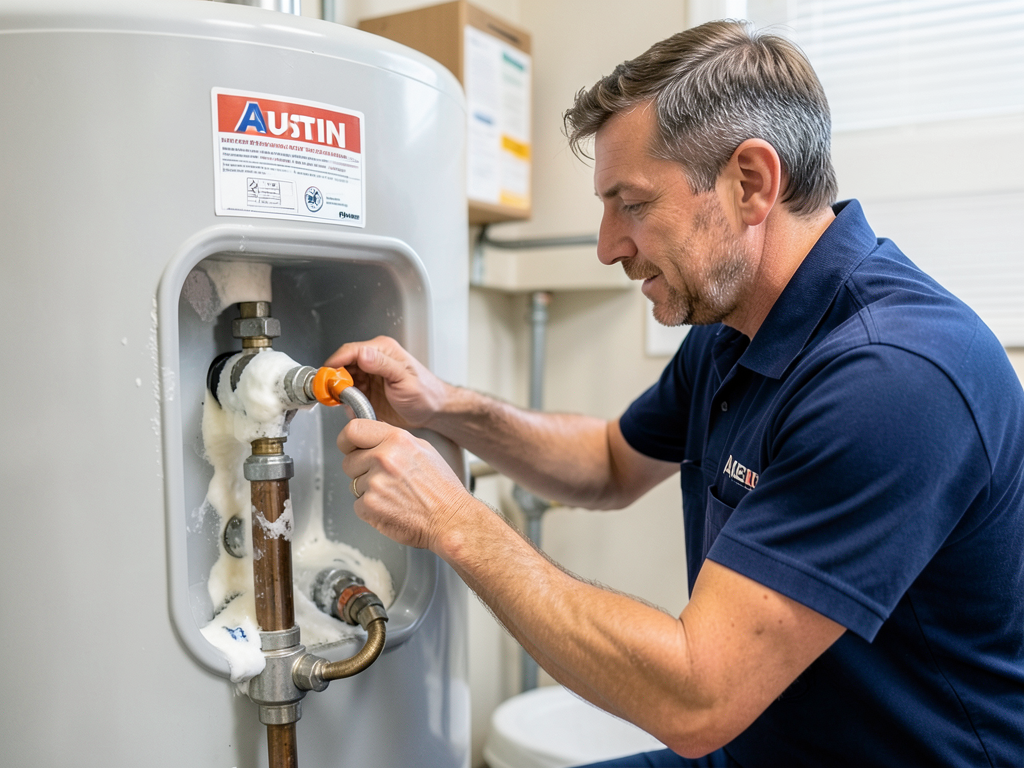
Why Traditional Tank Water Heaters Only Last About Ten Years in Central Texas
Traditional tank water heaters in Austin typically last 8 to 12 years with proper maintenance. The 10-year mark represents a sweet spot where most units in our area reach the end of their useful life due to Central Texas’s unique combination of hard water, extreme temperatures, and specific installation conditions. Understanding these local factors helps you plan for replacement before your water heater fails completely. Dealing with Central Texas Hard Water – The Best Water Softener Systems for Steiner Ranch Homes.
How Long Does a Water Heater Last in Austin, Texas?
The average lifespan of a traditional tank water heater in Austin is 8 to 12 years. This range is shorter than national averages because of our area’s hard water and climate conditions. Tankless water heaters typically last 15 to 20 years in Central Texas offering a longer service life for homeowners willing to invest in the upgrade. National Association of Home Builders.
Average Lifespan: Traditional Tank vs. Tankless Units
| Water Heater Type | Average Lifespan in Austin | Key Factors Affecting Lifespan |
|---|---|---|
| Traditional Tank (40-50 gallon) | 8-12 years | Hard water sediment buildup anode rod depletion |
| Tankless (Gas or Electric) | 15-20 years | Water quality maintenance frequency installation quality |
| Heat Pump Water Heater | 10-15 years | Climate conditions proper ventilation maintenance |
Why Austin’s Hard Water is Your Water Heater’s Biggest Enemy
Austin’s water supply comes primarily from the Colorado River and the Edwards Aquifer both known for high mineral content. The water in our area typically measures 15 to 20 grains per gallon of hardness which translates to significant mineral buildup inside your water heater tank over time.
The Impact of Limestone and Calcium Buildup
Hard water contains high levels of calcium and magnesium. When heated these minerals precipitate out of the water and form a thick layer of sediment at the bottom of your tank. This sediment acts as an insulator forcing your water heater to work harder and longer to heat the same amount of water.
The sediment layer also creates hot spots on the tank bottom accelerating corrosion and weakening the steel. In Central Texas where water heaters often run year-round due to our mild winters this constant heating and cooling cycle speeds up the deterioration process significantly.
According to the International Association of Plumbing and Mechanical Officials (IAPMO) water heaters in areas with hardness levels above 10 grains per gallon should be flushed annually to maintain efficiency and extend lifespan. Austin’s water often exceeds this threshold making regular maintenance even more critical. International Association of Plumbing and Mechanical Officials (IAPMO).
Signs Your Austin Home’s Water Heater is Reaching End-of-Life
Recognizing the warning signs of a failing water heater can prevent the inconvenience and potential water damage of a complete failure. Here are the most common indicators that your unit needs attention:
- Age of the unit – If your water heater is over 8 years old and shows any other warning signs replacement should be strongly considered
- Strange noises – Popping cracking or rumbling sounds indicate sediment buildup that’s causing overheating
- Rusty water – If you notice rusty water coming from your hot water taps but not your cold the tank is likely corroding from the inside
- Leaking around the base – Any moisture or pooling water around the tank base indicates a compromised tank that needs immediate attention
- Inconsistent water temperature – Fluctuating hot water temperatures suggest failing heating elements or a deteriorating tank
Proactive Maintenance: How to Extend Lifespan in Central Texas
Regular maintenance can add 2 to 4 years to your water heater’s lifespan in Austin’s harsh water conditions. The most critical maintenance task is annual flushing to remove sediment buildup.
Annual Flushing Procedure
Draining and flushing your water heater removes the sediment layer that accumulates over time. This process involves connecting a hose to the drain valve turning off the power or gas supply and completely emptying the tank. For Austin’s hard water conditions this should be done every 6 to 12 months depending on your water quality. Professional Drain Cleaning Services to Clear Stubborn Clogs in South Congress Apartments.
During flushing you’ll often see white or off-white sediment coming out of the drain valve. The more sediment present the more your water heater has been working inefficiently. After flushing the unit can heat water more effectively and operate at lower temperatures reducing wear on the tank and heating elements.
Anode Rod Replacement Schedule
The sacrificial anode rod is your water heater’s primary defense against corrosion. This rod typically made of magnesium or aluminum attracts corrosive elements in the water protecting the tank itself. In Austin’s hard water conditions the anode rod depletes much faster than in areas with softer water.
For Central Texas homes the anode rod should be inspected every 2 years and replaced every 3 to 5 years. Homes with extremely hard water may need more frequent replacement. A depleted anode rod leaves the tank vulnerable to corrosion significantly shortening the unit’s lifespan.
According to the National Association of Home Builders proper anode rod maintenance can extend a water heater’s life by up to 50%. This simple maintenance step is often overlooked but provides substantial return on investment.
When to Repair vs. Replace Your Unit
Deciding whether to repair or replace a water heater depends on several factors including age repair cost and efficiency considerations. Here’s a practical guide for Austin homeowners:
| Water Heater Age | Repair Cost | Recommended Action |
|---|---|---|
| Under 6 years | Less than 50% of replacement cost | Repair |
| 6-8 years | Less than 40% of replacement cost | Repair if minor issue |
| 8+ years | Any significant repair | Replace |
For units over 8 years old replacement often makes more financial sense than repair. New water heaters are significantly more energy-efficient and the cost of a repair on an aging unit may only delay the inevitable need for replacement by a year or two.
Additionally Austin Energy offers rebates for high-efficiency water heater replacements making new installations more affordable. The current rebate program provides up to $300 for qualifying Energy Star certified heat pump water heaters which can offset a significant portion of replacement costs.
The Attic Factor: How Texas Installations Affect Longevity
Many Austin homes have water heaters installed in attics due to space constraints. This common Texas installation presents unique challenges that can affect your water heater’s lifespan and performance.
Attic installations expose water heaters to extreme temperature fluctuations. During summer months attic temperatures can exceed 150°F causing the tank and pipes to expand and contract more than in conditioned spaces. This thermal cycling accelerates wear on tank seams and connections.
The lack of climate control also means water heaters in attics must work harder during winter months to maintain temperature especially in homes with poor attic insulation. This increased workload can reduce the unit’s lifespan by 1 to 2 years compared to installations in conditioned spaces.
Expansion tanks are required by the City of Austin Plumbing Code for all closed-loop water heater systems to prevent pressure buildup. In attic installations expansion tank failure can lead to pressure relief valve discharge causing water damage to ceilings and creating conditions that accelerate water heater deterioration. Plumbing San Marcos.
Energy Efficiency and Cost Considerations
Older water heaters operate at significantly lower efficiency than modern units. A 10-year-old water heater typically operates at 60-70% efficiency while new Energy Star certified models achieve 80-95% efficiency depending on the technology.
This efficiency difference translates to higher utility bills and more frequent cycling both of which contribute to shorter lifespan. The constant heating cycles in older units create more wear on components and increase the likelihood of premature failure.
Modern water heaters also feature improved tank insulation more durable heating elements and better corrosion protection. These advancements mean that even if your 10-year-old unit is still functioning replacing it with a new model could provide immediate energy savings and reduce the risk of unexpected failure.
Professional vs. DIY Maintenance Impact on Warranty
Many homeowners attempt DIY water heater maintenance to save money but this approach can actually void manufacturer warranties and reduce the unit’s effective lifespan. Professional maintenance ensures that all components are properly inspected and serviced according to manufacturer specifications.
Professional plumbers use specialized tools to test water heater performance including combustion analyzers for gas units and electrical testers for electric models. They can identify developing issues that DIY maintenance might miss such as minor leaks corrosion beginning at seam welds or failing pressure relief valves.
According to the Plumbing-Heating-Cooling Contractors Association (PHCC) professional maintenance performed annually can extend a water heater’s useful life by up to 30% while maintaining warranty coverage. This professional oversight provides peace of mind and helps prevent the catastrophic failures that often occur with neglected units. Plumbing-Heating-Cooling Contractors Association (PHCC).
Frequently Asked Questions
How can I tell how old my water heater is?
Check the manufacturer’s label on your water heater for the serial number. The first four digits typically indicate the month and year of manufacture. For example a serial number starting with “0721” means the unit was manufactured in July 2021. Most manufacturers use this format though some may vary.
Should I replace my water heater before it fails?
Yes if your water heater is over 8 years old and showing signs of age proactive replacement is often the best choice. Waiting for complete failure means you’ll have to make rushed decisions potentially pay emergency service fees and risk water damage from tank rupture. Planning replacement on your schedule is more cost-effective and less stressful. Finding an Emergency Plumber in Austin Who Actually Answers the Phone at 3 AM.
What size water heater do I need for my home?
Water heater sizing depends on your household size and hot water usage patterns. A typical 40-gallon tank serves 1-2 people while a 50-gallon tank handles 3-4 people comfortably. For larger households or homes with high hot water demand 75-gallon tanks or tankless systems may be more appropriate. A professional assessment can determine the optimal size for your specific needs. Is Switching to a Tankless Water Heater Worth It for Your Cedar Park Home?.
Can hard water be treated to extend my water heater’s life?
Yes installing a whole-house water softener can significantly extend your water heater’s lifespan by reducing mineral content in the water. Softened water prevents scale buildup and reduces the workload on heating elements. While water softeners require their own maintenance and represent an additional investment they can add 3-5 years to water heater life in Austin’s hard water conditions.
Call (737) 316-0588 today to schedule your water heater inspection. Our experienced technicians can evaluate your current unit’s condition recommend appropriate maintenance or replacement options and help you choose the best solution for your home’s hot water needs. Don’t wait for your water heater to fail – take control of your home’s comfort and efficiency now.
Pick up the phone and call (737) 316-0588 before the next cold front hits. Whether you need emergency repair routine maintenance or a complete replacement our team is ready to provide fast reliable service throughout the Austin area. We’ll help you avoid the inconvenience and potential damage of unexpected water heater failure.