
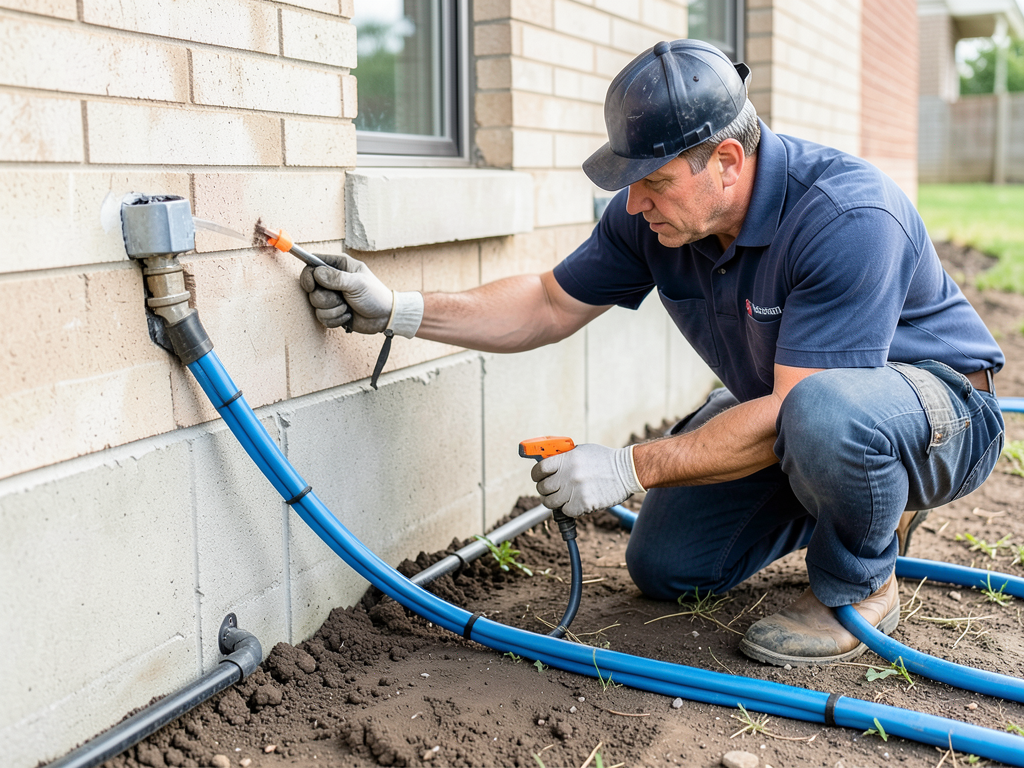
How Watering Your Foundation Can Actually Prevent Broken Pipes in Round Rock
Central Texas clay soil moves constantly with moisture changes. When soil dries and shrinks it pulls away from your foundation. This creates gaps that let your home shift and settle. Those tiny movements put tremendous stress on buried pipes. One day you wake up to a flooded bathroom or yard because a pipe finally snapped under the strain. Texas Commission on Environmental Quality.
The solution sounds simple. Keep the soil around your foundation at a consistent moisture level. When you do this properly you prevent the soil from expanding and contracting. Your home stays stable. Your pipes stay intact. This guide shows you exactly how to do it in Round Rock’s unique climate.
Why Round Rock’s Soil Breaks Your Pipes
Round Rock sits on expansive clay soil. This soil contains minerals that absorb water and swell dramatically. When it dries out it shrinks just as dramatically. The cycle of wet and dry creates constant movement under your home. Water Heater Maintenance Tips.
Your plumbing pipes run through this active zone. Copper pipes, PVC pipes, and cast iron all react differently to soil movement. Copper can develop pinhole leaks from stress. PVC can crack at joints. Cast iron can separate at bell and spigot connections. Plumbing San Marcos.
The Blackland Prairie soil in Williamson County has a shrink-swell capacity of up to 30 percent. That means soil can expand or contract by one-third of its volume. Imagine your pipes trying to flex that much every season.
According to the Texas Water Development Board, foundation movement causes over 90 percent of all slab leaks in Central Texas. The cost to repair a single slab leak averages between $2,000 and $6,000 depending on accessibility and damage extent. Dealing with Central Texas Hard Water – The Best Water Softener Systems for Steiner Ranch Homes.
Signs Your Foundation is Stressing Your Plumbing
Watch for these warning signs before you have a major break:
- Cracks appearing in interior drywall or exterior brick
- Doors that suddenly stick or won’t close properly
- Uneven floors that feel like you’re walking uphill or downhill
- Water pressure that drops unexpectedly
- Higher water bills without increased usage
- Warm spots on concrete floors that indicate hot water leaking under the slab
These symptoms mean your foundation has already moved enough to stress your plumbing system. The longer you wait the more likely you are to have a catastrophic failure.. Read more about Why You Need a Plumbing Inspection After Foundation Leveling in Your Windsor Park Home.
Professional plumbers use electronic leak detection equipment to find problems before they become emergencies. They can locate the exact spot where soil movement has stressed a pipe joint or caused a hairline crack. Professional Drain Cleaning Services to Clear Stubborn Clogs in South Congress Apartments.
The Soaker Hose Strategy for Round Rock Homes
A soaker hose system provides the most effective way to maintain consistent soil moisture. Place hoses 8 to 12 inches from your foundation perimeter. This distance allows water to seep inward without creating pressure against the foundation walls.. Read more about Lowering Your Water Bill with a Smart Irrigation Controller in Steiner Ranch.
Run your soaker hoses for 15 to 20 minutes every other day during dry periods. The goal is not to flood the area but to maintain a steady moisture level. Use a moisture meter to check soil at 6 inches deep. Target 15 to 20 percent moisture content.
Connect multiple hoses with Y adapters to cover your entire foundation perimeter. Use pressure regulators to prevent blowouts at hose connections. Install timers so you never forget to water or accidentally leave hoses running.
During Austin’s Stage 2 or Stage 3 drought restrictions you can still water foundations. The City of Austin allows foundation watering with soaker hoses or drip irrigation any day of the week. Just limit watering to before 10 AM or after 7 PM.
Round Rock residents should check with the City of Round Rock water department for current restrictions. Many areas allow hand watering and drip irrigation even during severe drought stages.
Austin Water Restrictions and Your Foundation
Central Texas experiences frequent drought cycles. Austin Water Utility currently operates under modified Stage 2 restrictions. These rules limit sprinkler use but allow foundation maintenance.
Soaker hoses and drip irrigation systems are exempt from most watering restrictions. You can run them any day as long as you follow time limits. This exemption exists because foundation watering prevents much more expensive damage.
Install a rain sensor on your irrigation controller. This automatically shuts off watering when nature provides moisture. It saves water and ensures you don’t overwater during rainy periods.
Consider a smart irrigation controller that connects to local weather data. These systems adjust watering schedules based on recent rainfall and forecasted conditions. They maintain optimal moisture while complying with all restrictions.
The EPA WaterSense program certifies controllers that reduce water usage by 20 percent or more. Look for this certification when shopping for smart controllers.
When Watering Isn’t Enough: Identifying Active Leaks
Sometimes soil shrinkage reveals problems that already exist. A sudden drop in soil level around your foundation might mean a pipe has been leaking for months.
Check for these signs of active leaks:
- Muddy spots in your yard that never dry out
- Patches of grass that grow much faster than surrounding areas
- Water running when all fixtures are off
- Cracks that grow larger over just a few weeks
- Musty odors coming from floors or walls
Professional plumbers use acoustic leak detection to hear water escaping from pipes underground. They also use thermal imaging to find hot water leaks through concrete slabs.
According to the International Association of Plumbing and Mechanical Officials, a single leaking toilet can waste up to 200 gallons per day. Multiple small leaks can add up to thousands of gallons monthly.
Call (737) 316-0588 today to schedule your inspection. Early detection saves thousands in repair costs.
Best Practices for Foundation Watering in Central Texas
Start watering in early spring before soil dries out completely. This prevents the initial shrinkage that causes the most stress on pipes.
Water deeply but infrequently. Shallow watering creates shallow roots and doesn’t reach the active soil zone where pipes exist. Aim for moisture penetration of 12 to 18 inches.
Check soil moisture with a probe or screwdriver. If it penetrates easily the soil has adequate moisture. If it meets resistance you need to water.
During extreme heat waves increase watering frequency but not duration. Hot, dry winds pull moisture from soil faster than normal conditions.
Winter requires different strategy. Water once monthly during winter if no rainfall occurs. Frozen soil expands and can damage pipes just like dry soil contracts.
Install French drains if you have drainage problems. Standing water near your foundation causes different but equally serious issues.
Comparing Pipe Materials and Soil Movement Vulnerability
| Pipe Material | Vulnerability to Soil Movement | Average Lifespan in Central Texas | Repair Cost Range |
|---|---|---|---|
| Copper | High – develops pinhole leaks from stress | 20-40 years | $150-$500 per repair |
| PVC | Medium – cracks at glued joints | 40-60 years | $100-$300 per repair |
| CPVC | High – becomes brittle with age | 30-50 years | $150-$400 per repair |
| Galvanized Steel | Very High – corrodes and separates | 20-40 years | $200-$600 per repair |
| PEX | Low – flexible and expands slightly | 50+ years | $100-$250 per repair |
PEX piping shows the best resistance to soil movement. Its flexibility allows it to absorb minor foundation shifts without breaking. Many new construction homes in Round Rock now use PEX exclusively.
Older homes with galvanized steel pipes face the highest risk. These pipes corrode from the inside out and become brittle. They separate at threaded connections when soil moves.
Copper pipes in expansive clay soil typically last 20 to 30 years before developing stress-related leaks. The copper work-hardens over time and becomes more brittle.
Creating Your Foundation Watering Schedule
Follow this schedule for most Round Rock homes:
- Early Spring Setup
Install soaker hoses and test all connections for leaks. Check timer batteries and programming.
- Pre-Summer Watering
Begin watering twice weekly in April or May. Increase to three times weekly by June.
- Summer Maintenance
Water every other day during July and August. Monitor soil moisture weekly.
- Fall Transition
Reduce watering to once weekly by October. Remove timers if freezing weather approaches.
- Winter Care
Water monthly if no rainfall occurs. Drain hoses before first freeze.
Adjust this schedule based on your specific conditions. Homes on slopes may need more water at the top and less at the bottom. Areas under large trees may need extra watering since tree roots compete for moisture.
Monitor your water bill for unexpected increases. A properly maintained system uses about 500 to 1,000 gallons monthly for foundation watering. Much more than that indicates a leak somewhere.
Professional Foundation and Plumbing Inspection Services
Annual inspections catch problems before they become emergencies. A qualified plumber checks for pipe corrosion, joint integrity, and signs of soil movement stress.
Foundation specialists use laser levels to detect movement as small as 1/100th of an inch. They can tell if your home is settling unevenly and recommend corrective action.
Many companies offer combined foundation and plumbing inspections. This comprehensive approach identifies problems that affect both systems.
Look for contractors with experience in Central Texas soil conditions. They understand the specific challenges of Blackland Prairie clay and know what to check.
Ask about warranty coverage for repairs. Quality companies stand behind their work with 1 to 5-year warranties on most repairs.
Emergency Response for Pipe Bursts
Even with proper maintenance, pipes can still fail. Know where your main water shut-off valve is located. This valve stops all water flow to your home.
Locate the valve now before you need it. It’s usually near where the main water line enters your home. In slab homes it might be in a front flower bed or garage.
Practice turning the valve off and on. If it’s stuck or corroded you’ll need a plumber to replace it before an emergency occurs. Finding an Emergency Plumber in Austin Who Actually Answers the Phone at 3 AM.
Keep the phone number (737) 316-0588 handy. Quick response limits water damage and repair costs.
Turn off electricity to flooded areas if water reaches electrical outlets or appliances. Never stand in water to access electrical panels.
Document damage with photos for insurance purposes. Most homeowner policies cover sudden pipe failures but not gradual damage from poor maintenance.
Frequently Asked Questions
How much does foundation watering cost?
A soaker hose system costs $50 to $150 to install. Monthly water usage runs $10 to $30 depending on local rates and watering duration.
Can I overwater my foundation?
Yes. Overwatering creates hydrostatic pressure against foundation walls. It can cause basement flooding or foundation cracking. Target 15-20 percent soil moisture.
How long does it take to see results from foundation watering?
Soil moisture changes take 2-4 weeks to stabilize. You may notice doors closing easier and cracks stopping growth within one month.
Should I water my foundation during winter freezes?
Water once monthly if no rainfall occurs. Frozen soil expands and can damage pipes. Maintain minimal moisture to prevent extreme contraction.
What if I already have a slab leak?
Stop watering immediately and call a plumber. Foundation watering won’t fix an active leak and may make damage worse.
Call (737) 316-0588 before the next storm hits. Don’t wait until you have water running through your home. A quick inspection now prevents expensive emergency repairs later.
Foundation watering represents one of the most cost-effective home maintenance tasks you can perform. For less than $30 per month you can prevent thousands in pipe repair costs. The clay soil in Round Rock will move regardless of what you do. Your choice is whether that movement breaks your pipes or just shifts your foundation slightly.
Take action today. Install a soaker hose system this weekend. Check your soil moisture levels. Monitor your home for early warning signs. Your plumbing system will thank you with years of trouble-free service.
Remember that foundation watering is just one part of comprehensive home maintenance. Combine it with annual plumbing inspections and prompt leak repairs for maximum protection. For more information, visit American Society of Plumbing Engineers.