
How to Locate and Test Your Main Water Shutoff Valve Before a Pipe Bursts
Finding your main water shutoff valve before an emergency strikes could save you thousands in water damage. In Austin’s unique climate with hard freezes and aging infrastructure, knowing exactly where this valve sits and how to operate it matters more than ever. This guide walks you through identifying your shutoff location based on your home’s foundation type and provides clear steps to test the valve so it works when you need it most. Finding an Emergency Plumber in Austin Who Actually Answers the Phone at 3 AM.
Why Austin Homes Need Special Attention
Austin’s combination of expansive clay soil and slab-on-grade construction creates specific challenges for plumbing systems. Unlike homes in northern states with basements, most Austin residences have their main water line running through concrete slabs or shallow trenches. This makes the shutoff valve’s location critical since pipes are more vulnerable to soil movement and temperature swings. Plumbing San Marcos.
According to the City of Austin Water Utility, residential water main breaks increase by 40% during freeze events. Many of these emergencies stem from homeowners unable to locate or operate their shutoff valves quickly enough. City of Austin Water Utility.
Common Locations for Austin Homes
Your home’s foundation type determines where to look for the main shutoff valve. Here’s how to identify your specific setup:
Slab-on-Grade Foundations
Most homes built after 1970 in Austin use slab-on-grade construction. For these homes, the main shutoff typically sits:
- Near the water meter box at the curb (outdoor location)
- Inside the garage along the front wall where the water line enters
- Near the water heater in a utility closet or laundry room
Pier and Beam Foundations
Older Central Austin neighborhoods like Hyde Park and Travis Heights often feature pier and beam construction. These homes may have: Dealing with Central Texas Hard Water – The Best Water Softener Systems for Steiner Ranch Homes.
- A crawl space with visible plumbing
- The shutoff valve near the front foundation wall
- Multiple isolation valves throughout the home
Golden Nugget: Austin’s clay soil expands and contracts up to 30% with moisture changes, putting constant pressure on buried water lines. This soil movement is the leading cause of slab leaks in Central Texas homes.
Outdoor Shutoff: The City Meter Box
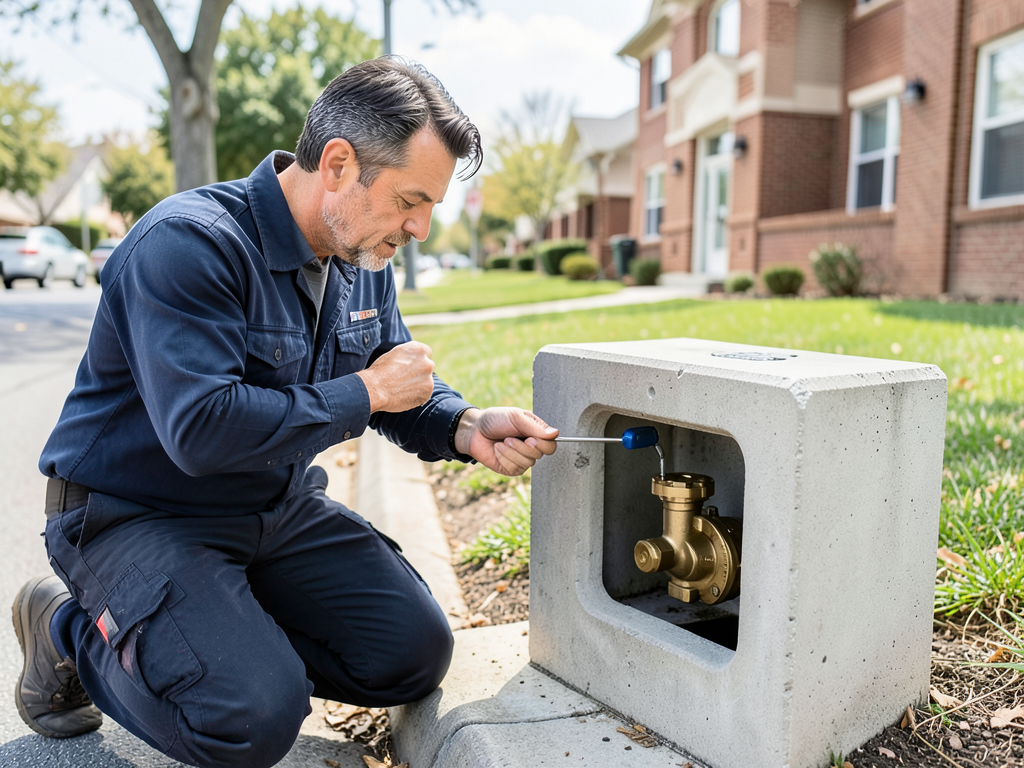
The most reliable location for your main shutoff is often the water meter box near the street. This concrete or plastic box contains both the city’s water meter and your private shutoff valve. Water Heater Maintenance Tips.
To locate it:
- Walk to the front curb where your water line enters the property
- Look for a rectangular lid marked “WATER” or with the City of Austin seal
- Remove the lid using a water meter key (available at hardware stores for under $15)
Golden Nugget: Austin Water Utility requires all new residential construction to install a curb stop valve within 5 feet of the water meter. This brass valve has a T-handle that turns 90 degrees to shut off water flow.
Diagnostic Tip: If you hear water running when all fixtures are off, use a screwdriver to press against the meter’s leak indicator. If it spins, you have a hidden leak somewhere in the system.
Indoor Shutoff Options
When the outdoor valve fails or is inaccessible during an emergency, knowing your indoor alternatives becomes crucial.
Garage Location
Many Austin homes built in the 1980s and 1990s have the main shutoff in the garage. Look for:
- A 1-inch copper or PEX pipe entering through the front wall
- A red or blue handle ball valve within 3 feet of the entry point
- Sometimes a pressure reducing valve (PRV) assembly nearby
Utility Room Setup
Newer constructions often consolidate plumbing near the water heater. The shutoff here might be:
- A gate valve (wheel handle) or ball valve (lever handle)
- Part of a manifold system with individual fixture controls
- Located on the cold water line before it reaches the water heater
Golden Nugget: Ball valves are superior to gate valves for main shutoffs because they provide a complete shutoff with a simple 90-degree turn and are less prone to seizing over time.
Step-by-Step: How to Turn the Valve
Knowing the location matters little if you can’t operate the valve when needed. Follow these steps:
Ball Valve Operation
- Locate the lever handle on the valve
- Turn it 90 degrees until it’s perpendicular to the pipe
- The water should stop flowing within 30 seconds
Gate Valve Operation
- Find the round wheel handle
- Turn clockwise (right) several full rotations
- Keep turning until you feel firm resistance
Diagnostic Test: After shutting off the valve, open a sink faucet. If water continues to flow, the valve isn’t fully closed or is faulty.
Golden Nugget: According to the International Plumbing Code Section 604.8, main shutoff valves must be accessible without special tools and located within 3 feet of the water service entrance.
Testing Your Shutoff Valve
Don’t wait for an emergency to discover your valve is seized or broken. Test it annually:
- Turn off all water-using appliances and fixtures
- Locate and operate your main shutoff valve
- Check all faucets – they should produce no water after 30 seconds
- Turn the valve back on and verify normal water pressure returns
If the valve feels stuck, makes grinding noises, or doesn’t fully stop water flow, it needs replacement. This is especially common in older Austin neighborhoods where valves haven’t been operated in years.
Special Considerations for Austin’s Climate
Austin’s weather patterns create unique plumbing challenges that affect shutoff valve reliability.
Freeze Protection
During hard freezes, outdoor valves can become brittle and break. The 2021 winter storm Uri taught many Austin homeowners this lesson painfully. If freezing temperatures are forecast:
- Locate your indoor shutoff as backup
- Consider installing a freeze-resistant valve if yours is old
- Keep the area around outdoor valves clear of debris
Hard Water Impact
Austin’s water from the Edwards Aquifer contains high mineral content. Over time, calcium buildup can cause gate valves to seize. Ball valves generally resist this better but still benefit from annual operation.
Golden Nugget: Homes in the Hill Country and western Austin suburbs experience harder water than those in the eastern part of the city, affecting valve longevity differently across the metro area.
What to Do If the Valve Won’t Turn
A seized valve during an active leak creates a dangerous situation. Here’s your emergency protocol:
- Stay calm – panicking wastes precious minutes
- Locate the water meter box and use the meter key to access the curb stop
- If the curb stop also won’t turn, call Austin Water Utility’s emergency line at (512) 972-1000
- Document the valve’s condition with photos for insurance purposes
Call to Action: Don’t risk thousands in water damage from a failed shutoff valve. Call (737) 316-0588 today to schedule a professional valve inspection and testing service. Our licensed plumbers carry replacement valves and can install them the same day if needed.
Preventing Future Emergencies
Beyond knowing your valve location, several preventive measures reduce your risk of catastrophic water damage:
Annual Plumbing Inspection
A licensed plumber can identify weak points in your system before they fail. During an inspection, we check:
- Valve operation and replacement needs
- Pipe condition and corrosion signs
- Water pressure levels (ideal range: 40-80 PSI)
- Connections to water heaters and appliances
Smart Water Monitoring
Modern leak detection systems can automatically shut off your water when abnormal flow is detected. These systems integrate with your smartphone and provide 24/7 protection.
Golden Nugget: The average water damage claim in Austin exceeds $10,000, with many cases involving failed shutoff valves that could have been prevented with simple testing.
When to Call a Professional
Some shutoff situations require expert intervention:
- The valve is seized and won’t turn
- You discover corrosion or mineral buildup
- Your home has an unusual plumbing configuration
- You’re planning major renovations affecting plumbing
Professional replacement typically takes 1-2 hours and includes proper disposal of the old valve. Most Austin homes can be upgraded to a modern ball valve system for under $300. Professional Drain Cleaning Services to Clear Stubborn Clogs in South Congress Apartments.
Call to Action: Ready to protect your home from water damage? Pick up the phone and call (737) 316-0588 before the next storm hits. Our emergency response team serves all Austin neighborhoods within 60 minutes.
Frequently Asked Questions
Where is the main water shutoff valve located in most Austin homes?
Most Austin homes have the main shutoff near the water meter box at the curb or inside the garage along the front wall. Homes with pier and beam foundations may have it near the foundation in a crawl space.
How do I know if my shutoff valve is working properly?
Test it annually by turning the valve off and checking that all faucets stop producing water within 30 seconds. If water continues to flow or the valve feels stuck, it needs professional attention.
What’s the difference between a ball valve and a gate valve?
Ball valves use a lever handle that turns 90 degrees for complete shutoff and resist seizing better. Gate valves use a wheel handle that requires multiple turns and are more prone to corrosion and failure over time.
Can I replace my shutoff valve myself?
While possible, replacing a main shutoff valve requires shutting off water to your entire home and proper tools. Mistakes can cause flooding. Professional installation ensures code compliance and proper function.
How much does it cost to replace a main water shutoff valve in Austin?
Professional replacement typically costs $250-$400 depending on valve type and accessibility. This investment prevents potential thousands in water damage from valve failure. For more information, visit International Plumbing Code Section 604.8.
You may also find this helpful. How an Undetected Irrigation Leak Is Quietly Driving Up Your Circle C Ranch Water Bill.
You may also find this helpful. A Tenant’s Guide to Dealing with a Leaky Pipe and a Slow Landlord in North University.
You may also find this helpful. Finding That Mystery Leak in Your Davenport Ranch Swimming Pool Auto-Fill Line.