
High Water Pressure and Why Your PRV Matters in Great Hills
Great Hills sits on elevated terrain where Austin Water’s municipal pressure often exceeds 80-100 PSI before it reaches homes. That extra force can destroy dishwashers, water heaters, and copper pipes from the inside out. A properly functioning pressure reducing valve (PRV) cuts that pressure down to a safe 50-60 PSI range, protecting your plumbing system from catastrophic failure. How to Tell if Your West Lake Hills Home Has a Slab Leak (And Who to Call for Repairs).
When a PRV fails, you may hear banging pipes, see fluctuating shower pressure, or notice your water bill creeping up. These are warning signs that your home’s first line of defense against high pressure is wearing out. Left unchecked, the damage can lead to burst pipes, flooded basements, and thousands in repairs.
All Pro Plumbing has been diagnosing and replacing PRVs in Great Hills and Northwest Austin since 2015. We test incoming pressure with calibrated gauges, verify your main shut-off valve is working, and install code-compliant valves with thermal expansion tanks where required. Call (737) 316-0588 today to schedule your inspection before the next pressure spike hits. Plumbing San Marcos.
How High Water Pressure Damages Great Hills Homes
Elevated neighborhoods like Great Hills experience higher municipal pressure because water must travel uphill through the distribution system. Austin Water often delivers pressures above 80 PSI to maintain flow at higher elevations. Without a PRV, that pressure can exceed the rating of most household fixtures.
High pressure accelerates wear on washing machine valves, dishwasher solenoids, and toilet fill valves. It also increases the risk of water hammer, a shockwave that travels through pipes when valves close suddenly. Over time, water hammer can loosen joints, crack fittings, and even cause soldered connections to fail.
Thermal expansion adds another layer of risk. When water heats in a closed system, it expands. If your water heater lacks a properly sized expansion tank, that extra volume has nowhere to go, creating even more pressure on your plumbing. The Uniform Plumbing Code (UPC) Section 510.0 requires expansion tanks in closed systems where a backflow preventer or PRV is installed. Uniform Plumbing Code Section 510.0.
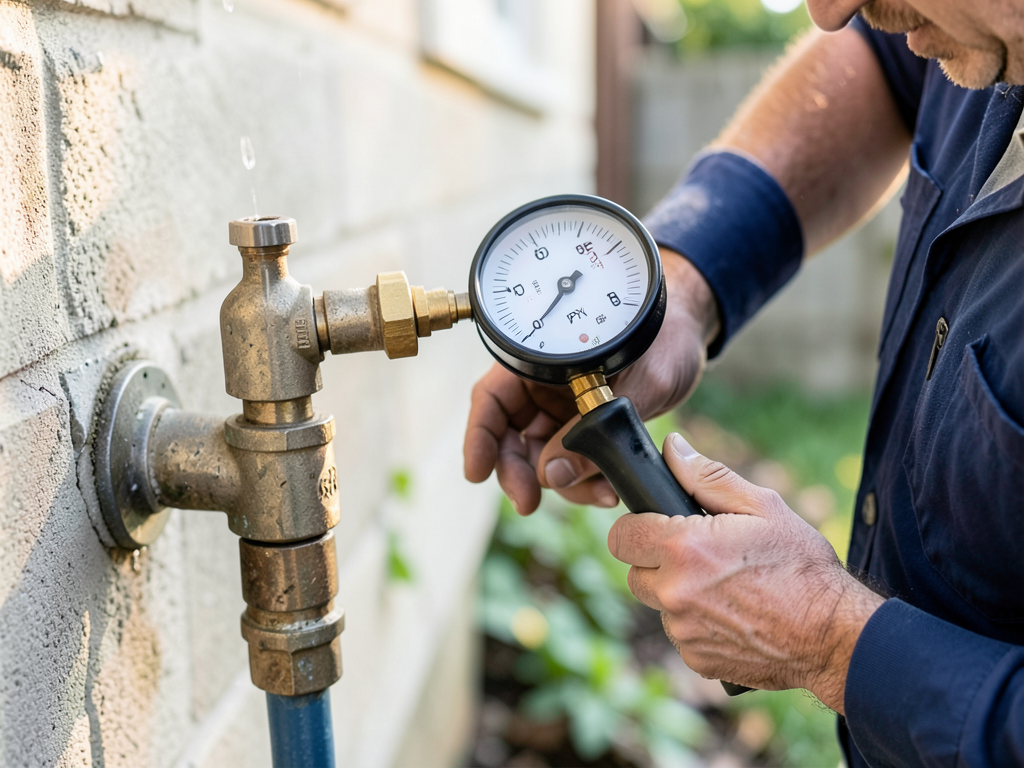
Diagram showing how high municipal pressure enters a home, passes through a PRV, and feeds safe-pressure lines to fixtures and appliances.
Signs Your PRV is Failing in Great Hills
A failing PRV often announces itself through sound before you see any visible damage. If you hear banging or knocking in your walls when you turn off a faucet, that’s water hammer caused by pressure spikes. The sound can travel through shared walls and even vibrate drywall in severe cases.
Fluctuating water pressure is another red flag. If your shower pressure drops when someone flushes a toilet, or if it surges unexpectedly, your PRV may not be regulating pressure consistently. This inconsistency can also cause premature wear on single-handle faucets and shower valves.
High water bills with no obvious leak are a common symptom in Great Hills homes with failing PRVs. Small leaks at fixture connections or running toilets can waste hundreds of gallons per month. In some cases, the PRV diaphragm tears, allowing full municipal pressure to reach your home unchecked.
Visible leaks at the PRV housing or water stains on the wall near the valve indicate the internal spring or diaphragm has failed. Corrosion around the valve body is another sign, especially in homes with hard water from the Edwards Aquifer. If you notice any of these signs, shut off your main water valve and call a licensed plumber immediately.
Testing Water Pressure in Great Hills Homes
Testing water pressure is the first step in diagnosing a PRV problem. We use a calibrated pressure gauge threaded onto an outdoor hose bib or laundry faucet. Ideal residential pressure ranges from 40-60 PSI. Anything above 80 PSI requires immediate attention.
Pressure testing should be done when no water is being used inside the home. Turn off all fixtures, then attach the gauge and open the valve fully. Let the gauge stabilize for 30 seconds, then record the reading. If pressure drops rapidly when you open an indoor faucet, your PRV may be stuck or clogged.
We also test for thermal expansion by heating the water heater and monitoring pressure changes. If pressure rises more than 10 PSI during heating, your system lacks adequate expansion protection. This test is critical in Great Hills, where many homes have 50-gallon or larger water heaters that produce significant expansion volume.
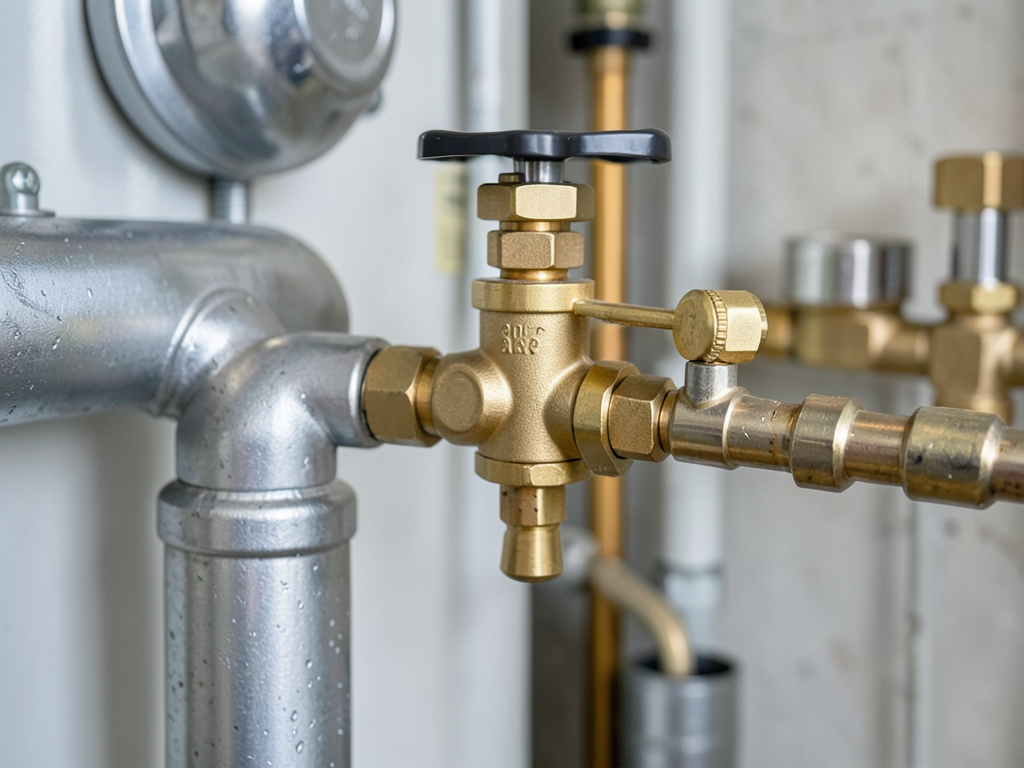
Photo of a plumber attaching a pressure gauge to an outdoor hose bib, with a pressure reading of 85 PSI displayed on the gauge.
PRV Repair vs Replacement Decision Matrix
Not every PRV problem requires full replacement. If the diaphragm is torn but the body is intact, we can sometimes replace just the internal cartridge. This repair is less expensive but only viable if the valve body isn’t corroded or leaking.
Replacement is necessary when the valve body shows signs of corrosion, the adjustment screw is stripped, or the spring mechanism has lost tension. Most PRVs have a 10-15 year lifespan in Central Texas, where hard water and temperature swings accelerate wear. If your valve is older than 12 years, replacement is usually the most cost-effective option. Texas Commission on Environmental Quality.
We also consider the valve’s accessibility. PRVs installed in tight crawl spaces or behind finished walls may be more expensive to replace due to labor complexity. In these cases, we evaluate whether a repair can extend the valve’s life until a more convenient time for replacement.
Cost factors include the valve brand, pipe size, and whether new fittings or unions are needed. High-quality brass valves from manufacturers like Watts or Wilkins cost more upfront but offer better reliability and easier future service. We provide a written estimate before any work begins, so you know exactly what to expect.
Thermal Expansion Tanks and Code Compliance
Thermal expansion tanks are required by the Uniform Plumbing Code when a backflow preventer or PRV creates a closed system. The tank absorbs the extra volume of water as it heats, preventing dangerous pressure spikes. Without one, your water heater’s temperature and pressure relief valve may drip constantly, or worse, fail to open during an emergency. Finding an Emergency Plumber in Austin Who Actually Answers the Phone at 3 AM.
Expansion tanks come in various sizes, typically 2 to 5 gallons for residential use. The correct size depends on your water heater’s capacity and the incoming cold water temperature. In Great Hills, where groundwater enters at around 70°F and gets heated to 120°F, a 40-50 gallon heater usually needs a 3-4 gallon expansion tank.
Installation involves mounting the tank on the cold water line near the water heater, usually with a tee fitting. The tank contains a pre-charged air bladder that compresses as water expands. Over time, the bladder can lose pressure, so annual testing with a tire gauge is recommended. If the tank feels heavy and doesn’t hold air, it needs replacement.
Photo of a newly installed brass PRV with an expansion tank mounted on the cold water line near a gas water heater.
Water Hammer Prevention in Great Hills Plumbing
Water hammer occurs when a valve closes suddenly, sending a pressure wave back through the pipes. In Great Hills homes with high pressure, this effect is amplified. The resulting shockwaves can loosen pipe supports, damage valves, and even cause soldered joints to crack over time.
Water hammer arrestors are the primary solution. These small devices contain a piston or air chamber that absorbs the shock. They’re typically installed on washing machine valves, dishwasher supply lines, and at the end of long pipe runs. In severe cases, we may recommend a whole-house arrestor system.
Pipe strapping and proper support also reduce hammer effects. Loose pipes can move when pressure waves hit, creating noise and increasing wear at connection points. We secure pipes with appropriate hangers every 6-8 feet for horizontal runs and every 10 feet for vertical runs, per UPC Table 307.1.
Adjusting the PRV’s pressure setting can also help. Setting the valve to 50-55 PSI instead of the maximum 60 PSI reduces the force of pressure waves. Combined with arrestors and proper pipe support, this approach significantly reduces water hammer in Great Hills homes.
Our PRV Repair and Installation Process
Every PRV service call starts with a comprehensive pressure test. We measure both static and dynamic pressure, check for thermal expansion, and inspect visible plumbing for signs of high-pressure damage. This diagnostic step ensures we address the root cause, not just the symptoms.
If replacement is needed, we shut off the main water supply and drain the system. We then cut out the old valve, clean the pipe ends, and install new unions or fittings as needed. For homes with copper pipes, we use silver-bearing solder to ensure strong joints that resist corrosion. Professional Drain Cleaning Services to Clear Stubborn Clogs in South Congress Apartments.
After installation, we pressure test the new valve, adjust it to the target 50-60 PSI range, and verify that all fixtures operate correctly. We also check the expansion tank’s pre-charge pressure and adjust it if necessary. Finally, we clean up the work area and provide documentation of the work performed.
Our installations include a one-year warranty on parts and labor. We use only lead-free, code-compliant components and follow all Travis County permitting requirements. If your home requires a permit for the work, we handle the paperwork and inspections so you don’t have to.
Why Choose All Pro Plumbing for PRV Service
All Pro Plumbing has been serving Great Hills and Northwest Austin since 2015. Our master plumbers hold Texas State License #M40583 and carry full liability insurance. We understand the unique challenges of high-pressure plumbing in elevated neighborhoods and have resolved hundreds of PRV issues in the area.
We offer upfront pricing with no hidden fees. After our diagnostic test, you’ll receive a written estimate that details the recommended solution, parts needed, and total cost. We never perform work without your approval, and we stand behind our repairs with a one-year warranty.
Our trucks are fully stocked with common PRV sizes and brands, allowing us to complete most repairs in a single visit. We also carry thermal expansion tanks, water hammer arrestors, and other components needed to bring your system into code compliance. This means less waiting and faster resolution of your plumbing problems.
Emergency service is available 24/7. If your PRV fails and you’re facing a burst pipe or flooding, call (737) 316-0588 immediately. We’ll dispatch a licensed plumber to your Great Hills home as quickly as possible to stop the damage and restore safe water pressure.
Frequently Asked Questions
How often should I replace my PRV?
Most PRVs last 10-15 years in Central Texas. If your valve is over 12 years old, replacement is recommended to prevent unexpected failure. Dealing with Central Texas Hard Water – The Best Water Softener Systems for Steiner Ranch Homes.
Can I adjust my PRV myself?
You can try turning the adjustment screw, but if pressure doesn’t change or if you hear water running through the valve, it likely needs professional service. Incorrect adjustment can damage fixtures.
What PSI should my home water pressure be?
Ideal residential pressure is 40-60 PSI. Anything above 80 PSI requires a PRV to prevent damage to plumbing and appliances.
Is a thermal expansion tank really necessary?
Yes, if you have a backflow preventer or PRV creating a closed system. The Uniform Plumbing Code requires expansion tanks to prevent dangerous pressure buildup.
How much does PRV replacement cost in Great Hills?
Costs vary based on valve size, accessibility, and whether new fittings are needed. After our diagnostic test, we provide a written estimate with no hidden fees.
Take Action Before High Pressure Damages Your Home
High water pressure in Great Hills isn’t just annoying—it’s destructive. Every month you wait increases the risk of burst pipes, flooded rooms, and ruined appliances. A simple PRV test can reveal whether your home is protected or vulnerable.
Don’t wait for the sound of running water behind your walls or the sight of water stains on your ceiling. Call (737) 316-0588 today to schedule your comprehensive pressure test. Our licensed plumbers will diagnose your system, explain your options, and provide upfront pricing before any work begins.
Whether you need a quick adjustment, a diaphragm replacement, or a complete valve upgrade with expansion tank installation, All Pro Plumbing has the experience and parts to get your Great Hills home’s water pressure under control. Pick up the phone and call (737) 316-0588 now—your plumbing system will thank you.