
Why Those Iconic Travis Heights Heritage Oaks Are a Constant Threat to Your Sewer Line
The majestic live oaks that line the streets of Travis Heights are what make this Austin neighborhood so special. Their sprawling canopies provide shade in the brutal Texas heat and their gnarled branches tell stories of a century past. But beneath the beauty lies a hidden plumbing nightmare that’s costing homeowners thousands in repairs. EPA Sewer System Information.
Those same heritage oaks are actively seeking moisture through your sewer pipes, sending tiny root tendrils through microscopic cracks in clay or cast iron pipes that were installed decades before modern building codes existed. Once inside, these roots grow into thick masses that trap grease, debris, and eventually cause complete blockages or pipe collapse.
The problem is particularly severe in Travis Heights because the neighborhood sits on Austin’s infamous Blackland Prairie clay soil. This soil expands when wet and contracts when dry, creating constant movement that fractures old sewer lines. Combine that with the aggressive root systems of mature oaks that can extend 2-3 times the height of the tree, and you have a perfect storm for sewer line destruction.
How Travis Heights’ Blackland Clay Soil Makes the Problem Worse
Austin’s Blackland Prairie soil is notorious among plumbers for its high shrink-swell capacity. During our hot, dry summers, this clay soil contracts dramatically, creating gaps and cracks around pipes. When fall rains return, the soil expands again, putting immense pressure on already compromised sewer lines. City of Austin Water Utility.
This constant expansion and contraction is the leading cause of sewer line failures in Travis Heights. The movement creates hairline fractures in clay pipes that were common in homes built before the 1980s. These cracks are invisible to homeowners but wide enough for tiny root hairs to penetrate.
The problem compounds because Travis Heights’ mature tree canopy means roots are already established and searching for water sources. During drought conditions, which we experience frequently in Central Texas, these roots become even more aggressive in seeking moisture from your sewer line. Dealing with Central Texas Hard Water – The Best Water Softener Systems for Steiner Ranch Homes.
Signs Your Heritage Oak Has Invaded Your Sewer Line
Most homeowners don’t realize they have a root problem until it’s too late. Here are the warning signs that your beautiful oak tree is secretly destroying your plumbing: Plumbing San Marcos.
- Slow drains throughout the house – If multiple fixtures drain slowly, it often indicates a main line blockage rather than a localized clog.
- Gurgling sounds from toilets – Roots create irregular surfaces inside pipes that trap air and cause gurgling when water flows past.
- Localized lush grass patches – Areas of your yard that are inexplicably greener and faster-growing often indicate a leaking sewer line feeding the roots.
- Foul odors from drains – Roots trap debris and create pockets where sewage can accumulate and decompose.
- Frequent clogs requiring plunging – If you’re constantly dealing with clogs, roots may be creating a net-like structure inside your pipes.
The City of Austin Plumbing Code (Section 708) requires proper sewer line installation with specific bedding materials to prevent settling and cracking. However, many Travis Heights homes were built before these requirements existed, leaving them vulnerable to root intrusion.
Professional Diagnosis: Sewer Camera Inspection Technology
The only way to know for certain if roots have invaded your sewer line is through professional video inspection. Our high-definition waterproof cameras travel through your pipes, providing real-time video of any damage, blockages, or root intrusion. Professional Drain Cleaning Services to Clear Stubborn Clogs in South Congress Apartments.
During an inspection, we look for several key indicators:
- Root structures appearing as hair-like projections or thick masses
- Cracks, fractures, or offset joints in the pipe
- Accumulations of grease, debris, or scale buildup
- Low spots or bellies where sewage collects
- Evidence of pipe collapse or severe deterioration
The camera inspection process typically takes 1-2 hours and provides a DVD recording of your pipe’s interior condition. This documentation is valuable for insurance claims and helps determine the most appropriate repair method.

A technician operates a sewer camera inspection system, showing the real-time video feed on a monitor as the camera navigates through underground pipes to identify root intrusion and pipe damage.
Root Removal Methods: What Actually Works in Austin
Not all root removal methods are created equal. The effectiveness depends on the severity of the intrusion, pipe material, and local soil conditions. Here’s what actually works in Travis Heights’ unique environment:. Read more about How Watering Your Foundation Can Actually Prevent Broken Pipes in Round Rock.
Hydro-Jetting: The Gold Standard for Root Removal
Hydro-jetting uses high-pressure water (up to 4,000 PSI) to scour pipe walls clean of roots, grease, and scale. This method is superior to mechanical snaking because it removes the entire root mass rather than just creating a hole through it. Water Heater Maintenance Tips.
The process works by shooting a specialized nozzle through your pipes that blasts water in multiple directions simultaneously. The water pressure is strong enough to cut through roots but controlled enough to avoid damaging pipes when done correctly.
In Travis Heights’ clay soil conditions, hydro-jetting is particularly effective because it also removes the fine root hairs that snaking often misses. These tiny roots quickly grow back if not completely eliminated.
Mechanical Snaking: When It’s Appropriate
Mechanical snaking uses a rotating cable with cutting blades to chop through roots. While less thorough than hydro-jetting, it’s appropriate for minor root intrusions or as an emergency measure to restore flow quickly. Finding an Emergency Plumber in Austin Who Actually Answers the Phone at 3 AM.
The limitation of snaking is that it often leaves root fragments behind that can regrow within months. In Austin’s climate, where tree growth is rapid due to our long growing season, this means you might be dealing with the same problem again soon.
Chemical Root Killers: Use with Caution
Chemical root killers containing copper sulfate can be effective for maintenance but should never be the primary treatment method. These chemicals work by killing roots on contact but don’t remove the existing root mass.
Important: The Edwards Aquifer Authority has specific regulations about chemical use near recharge zones. Always consult with a licensed professional before using chemical treatments, especially in areas near Barton Springs or other environmentally sensitive locations.
Trenchless Sewer Repair: The Modern Solution for Historic Homes
For Travis Heights homeowners, the thought of trenching through mature oak tree roots and historic landscaping is terrifying. Fortunately, trenchless technology offers solutions that preserve your property while fixing the underlying problem.. Read more about Getting a Property Tax Break for Rainwater Harvesting in Travis County.
Cured-in-Place Pipe (CIPP) Lining
CIPP lining involves inserting a resin-saturated felt tube into your existing pipe, then curing it with hot water or steam. The result is a new pipe within your old pipe, typically with a 50-year lifespan.
This method is ideal for Travis Heights because it requires only two access points rather than digging up your entire yard. The new lining is seamless and resistant to root intrusion, solving the problem permanently.
The process typically takes one day and costs 30-50% less than traditional excavation. However, it requires that your pipes be structurally sound enough to serve as a host for the new lining.
Pipe Bursting: For Severely Damaged Lines
Pipe bursting is used when pipes are too damaged for lining. A bursting head is pulled through the existing pipe, simultaneously breaking it apart and pulling the new pipe behind it.
This method also requires minimal excavation and can increase your pipe’s diameter, improving flow capacity. It’s particularly useful for the old clay pipes common in Travis Heights’ historic homes.
Understanding Your Responsibility: City vs. Homeowner
Many Travis Heights homeowners are surprised to learn that they’re responsible for the entire sewer line from their house to the main sewer in the street. This includes the portion under the city right-of-way and your neighbor’s yard if the line runs diagonally across properties.
The City of Austin Water Utility maintains the main sewer lines but homeowner responsibility begins at the connection point to your house. This means any repairs or maintenance between your foundation and the street are your financial responsibility.
According to Austin Water Utility regulations, homeowners must obtain permits for sewer line repairs. This ensures work meets current code requirements and is inspected for proper installation. Working without permits can result in fines and complications when selling your home.
Preventative Measures: Protecting Your Investment
While you can’t eliminate the threat of tree roots entirely, you can take steps to minimize damage and extend the life of your sewer line. Here are proven strategies for Travis Heights homeowners:
Annual Camera Inspections
Scheduling annual sewer camera inspections allows you to catch problems early when they’re less expensive to fix. Think of it like a dental checkup – finding a small cavity is much cheaper than a root canal.
During these inspections, we can identify early root intrusion, pipe deterioration, or other issues before they cause backups or complete failures. The cost of prevention is typically 10-20% of emergency repair costs.
Strategic Root Barriers
Installing root barriers between your trees and sewer line can prevent future problems. These barriers are typically made of plastic or metal and installed vertically in the ground to deflect roots downward and away from pipes.
The key is proper installation depth – barriers should extend at least 24-30 inches deep to be effective. This is a job for professionals who understand root growth patterns and local soil conditions.
Root Growth Inhibitors
Root growth inhibitors containing dichlobenil can be applied near your sewer line to prevent root growth in specific areas. These products create a zone where roots cannot grow without harming the tree.
Application should be done by professionals who can calculate the correct dosage and ensure it’s applied safely. Overuse can damage trees or contaminate groundwater.
The Cost Factor: What to Expect in 2026
Root-related sewer repairs in Travis Heights vary significantly based on the extent of damage and chosen repair method. Here’s what Austin homeowners are paying in 2026:
| Service | Cost Range | Typical Timeline |
|---|---|---|
| Sewer Camera Inspection | $350 – $550 | 1-2 hours |
| Hydro-Jetting Service | $800 – $1,500 | 2-4 hours |
| CIPP Lining (per foot) | $95 – $150 | 1 day |
| Traditional Excavation & Replacement | $120 – $200 per foot | 2-5 days |
| Emergency Service Call | $250 – $400 (after hours) | Immediate |
Factors affecting cost include pipe material, depth, accessibility, and whether landscaping or hardscaping needs repair after excavation. Trenchless methods typically cost more per foot but save money on restoration and landscaping.
Emergency Response: What to Do When Disaster Strikes
Sewer backups don’t wait for convenient times. Here’s your emergency action plan if you experience a sewage backup in your Travis Heights home:. Read more about Why Your Copperfield Yard Smells Like Sewage and What to Do About It.
- Stop Using Water Immediately
Stop all water usage in your home to prevent additional sewage from entering your lines and backing up into your house.
- Locate Your Cleanout
Find your main sewer cleanout (usually a 4-inch pipe with a cap, often near your house foundation or in the front yard). Remove the cap carefully to relieve pressure.
- Protect Your Property
Move valuables away from affected areas, especially in lower levels where backups typically occur first.
- Call for Emergency Service
Call (737) 316-0588 for 24/7 emergency response. Our technicians carry the equipment needed to address root intrusions immediately.
- Document the Damage
Take photos of any water damage for insurance purposes before cleanup begins.
Acting quickly can prevent thousands of dollars in water damage to your home’s interior. Most insurance policies don’t cover sewer backups unless you have specific riders, so prevention is your best financial protection.
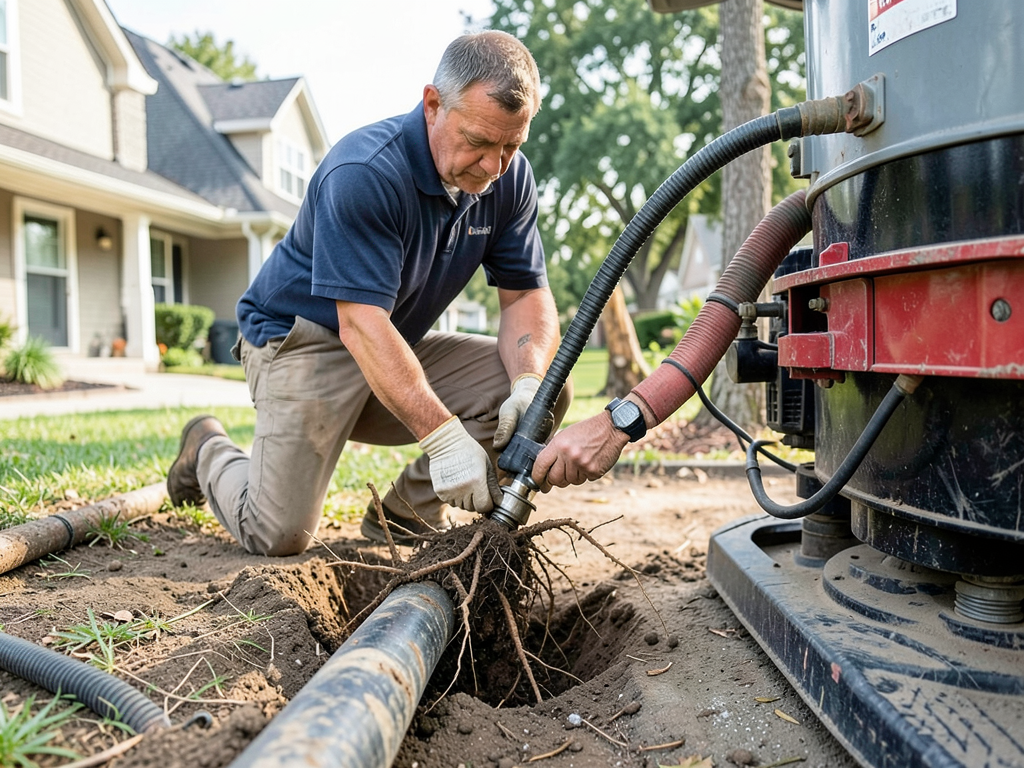
A technician uses a root cutting attachment on a drain cleaning machine, demonstrating the mechanical removal of tree roots from a residential sewer line in an Austin-area home.
Why Travis Heights Homes Are Especially Vulnerable
Travis Heights wasn’t just built around beautiful trees – the neighborhood’s very foundation makes it a perfect storm for sewer line problems. Here’s why:
The neighborhood was developed in the 1920s and 1930s, meaning many homes still have their original clay or cast iron sewer lines. These materials, while standard for their time, are particularly vulnerable to root intrusion and soil movement.
Travis Heights’ topography includes significant elevation changes, which means sewer lines often run at angles across properties. This creates stress points where pipes connect and increases the likelihood of settling and separation at joints.
The neighborhood’s mature tree canopy, while beautiful, means root systems are already well-established and aggressive in their search for water. Live oaks, pecans, and other native species common in Travis Heights have particularly extensive root systems.
Finally, many Travis Heights homes are historic properties with strict preservation guidelines. This can complicate repairs that might otherwise be straightforward, requiring specialized approaches that preserve both the home’s character and its plumbing infrastructure.
Choosing the Right Plumber: Questions to Ask
Not all plumbers have experience with the unique challenges of Travis Heights’ heritage homes and tree-lined streets. When selecting a plumber for root-related sewer issues, ask these specific questions:
- How many sewer camera inspections have you performed in Travis Heights specifically?
- Do you have experience with trenchless repair methods that won’t damage mature tree roots?
- Are you familiar with Austin Water Utility permit requirements for sewer repairs?
- Can you provide references from other Travis Heights homeowners with similar issues?
- Do you offer preventative maintenance plans for properties with known root problems?
The right plumber will understand the delicate balance between preserving your trees and protecting your plumbing. They should be able to explain your options in terms of both effectiveness and impact on your property.
Long-term Solutions: When to Consider Complete Replacement
While spot repairs and root removal can provide temporary relief, some situations call for complete sewer line replacement. Consider replacement if:
- Your pipes are over 40 years old and made of clay or Orangeburg (a fiber conduit material used in the mid-20th century)
- You’ve had multiple root intrusions in the same line over several years
- Camera inspection shows widespread deterioration or multiple cracks
- You’re planning major landscaping renovations anyway
- Multiple fixtures are consistently slow despite cleaning attempts
Complete replacement with modern PVC or HDPE pipe eliminates the root intrusion problem permanently. While the upfront cost is higher, it often proves more economical than repeated repairs over time.
A before-and-after comparison showing a collapsed clay sewer pipe infested with roots (left) versus a newly installed seamless PVC pipe (right), demonstrating the permanent solution to root intrusion problems.
Frequently Asked Questions
How long does hydro-jetting take to clear tree roots?
Most hydro-jetting services take 2-4 hours to completely clear a residential sewer line of roots. The exact time depends on the severity of the intrusion and the length of your sewer line.
Will cutting tree roots kill my heritage oak?
Professional root cutting for sewer line access typically doesn’t harm mature trees. However, excessive root removal or damage to the main root system can stress trees. A certified arborist can assess your specific situation.
How often should I have my sewer line inspected in Travis Heights?
We recommend annual camera inspections for Travis Heights homes, especially those over 30 years old or with known tree root issues. This preventative approach catches problems early when they’re less expensive to fix.
Can I prevent tree roots from entering my sewer line?
While you can’t completely prevent root intrusion, you can minimize it through regular maintenance, proper planting distances from sewer lines, and using root barriers. Modern pipe materials are also more resistant to root penetration.
Is trenchless sewer repair really less disruptive than traditional excavation?
Yes, trenchless methods typically require only two access points rather than digging up your entire yard. This preserves mature landscaping, reduces restoration costs, and can be completed in a single day versus several days for traditional excavation.
The heritage oaks of Travis Heights are worth preserving, but they shouldn’t come at the cost of your home’s plumbing infrastructure. By understanding the unique challenges these trees create and working with experienced professionals who know the neighborhood, you can protect both your beautiful trees and your sewer lines.
Don’t wait for a sewage backup to discover you have a root problem. Call (737) 316-0588 today to schedule your comprehensive sewer line inspection. Our Travis Heights plumbing experts can identify potential issues before they become emergencies and recommend the most cost-effective solutions for your specific situation.
Pick up the phone and call (737) 316-0588 before the next storm hits. The peace of mind knowing your plumbing is protected is worth the call.
You may also find this helpful. Why the Bamboo in Your Brentwood Backyard Is a Nightmare for Your Sewer Line.