
The Pros and Cons of Installing Hydronic Radiant Floor Heating in Your Spicewood Custom Home
Hydronic radiant floor heating offers unmatched comfort for Spicewood custom homes but comes with specific considerations for Central Texas. This system circulates warm water through PEX tubing beneath your floors creating even heat distribution without forced air. However Austin’s hard water occasional freeze risks and building code requirements affect system design and long-term performance. Austin Uniform Plumbing Code Section 607.
Why Austin Homeowners are Choosing Hydronic Radiant Heat
Spicewood residents increasingly select hydronic systems for their energy efficiency and zoning capabilities. Unlike electric mats these water-based systems integrate with existing plumbing infrastructure and can connect to tankless water heaters or dedicated boilers. The thermal mass of concrete slabs in slab-on-grade homes provides excellent heat retention during Austin’s mild winters. Plumbing & Mechanical Magazine.
Local builders appreciate that hydronic systems reduce airborne allergens since they eliminate ductwork. The systems also free up wall space by removing radiators and vents crucial for the open-concept designs popular in Spicewood’s Hill Country architecture. However installation requires careful planning during construction since retrofitting involves significant floor height adjustments. Hydronic Heating Association.
Hydronic vs. Electric Radiant Floors: Which is Right for Your Plumbing System?
Hydronic systems use PEX tubing connected to a manifold that distributes heated water throughout your home. Electric systems rely on resistance wires embedded in mats. For Spicewood homes hydronic systems offer lower operating costs but higher upfront installation expenses. Water Heater Maintenance Tips.
Electric systems cost $8-12 per square foot installed while hydronic systems run $12-20 per square foot. However hydronic operating costs average $1-2 per day versus $3-5 for electric systems of similar size. The break-even point typically occurs within 5-7 years for homes over 1,000 square feet.
Hydronic systems also handle larger areas more efficiently. A single manifold can serve multiple zones allowing you to heat only occupied rooms. Electric systems work better for small bathrooms or kitchens where quick warm-up times matter more than whole-house efficiency.
| Feature | Hydronic | Electric | Best For |
|---|---|---|---|
| Installation Cost | $12-20/sq ft | $8-12/sq ft | Budget projects |
| Operating Cost | $1-2/day | $3-5/day | Long-term savings |
| Installation Time | 2-3 days | 1 day | Quick projects |
| Energy Efficiency | 95% | 100% | Large areas |
The Installation Process: Slab-on-Grade vs. Retrofitting
Slab-on-grade installation represents the most common approach in Spicewood’s custom homes. During construction PEX tubing attaches to wire mesh before concrete pouring. The tubing spacing typically ranges from 6-12 inches depending on heat load calculations. After concrete cures the system connects to a manifold and boiler or water heater.
Retrofitting requires removing existing flooring and adding a thin-slab layer or using specialized low-profile panels. This increases floor height by 1-3 inches potentially affecting door clearances and transitions to other rooms. Many Spicewood homeowners choose retrofitting during major renovations when floor replacement already planned.
Installation complexity varies with home age. Homes built before 2000 may lack adequate insulation beneath slabs reducing system efficiency. Modern building codes require R-10 insulation under radiant slabs in Austin’s climate zone improving heat retention and reducing energy consumption by 15-20%.. Read more about Choosing Between PEX A and PEX B for Your Next Austin Plumbing Project.
Step-by-Step Installation Process
The installation process follows these key steps:
- Site evaluation and heat load calculation
- Plumbing layout design
- Manifold location selection
- PEX tubing installation
- Pressure testing for leaks
- Floor covering installation
- System commissioning
Each step requires specific expertise. For example pressure testing involves maintaining 100 PSI for 24 hours to verify system integrity. Any pressure drop indicates potential leaks requiring immediate attention.
Energy Efficiency and Cost Savings in the Texas Climate
Hydronic systems operate at lower temperatures than forced-air furnaces typically 85-140°F versus 120-160°F for baseboard heat. This efficiency translates to 15-30% energy savings compared to conventional heating methods. In Spicewood’s climate most homes need heating only 3-4 months annually making radiant systems ideal for supplemental rather than primary heating.
System efficiency depends heavily on water quality. Austin’s hard water (averaging 17-20 grains per gallon) causes mineral scaling that reduces heat transfer by up to 30% within five years. Installing a water softener or scale inhibitor becomes essential for system longevity. Without treatment mineral deposits can clog small manifold valves and reduce circulation.
Operating costs vary with fuel source. Natural gas boilers cost approximately $1.50 per therm while electric resistance heating runs $0.12-0.15 per kilowatt-hour. Propane systems cost $2.50-3.00 per gallon equivalent. Spicewood homes without natural gas access face higher operating costs but benefit from simpler installation.
Common Radiant Heating Repairs for Central Texas Homes
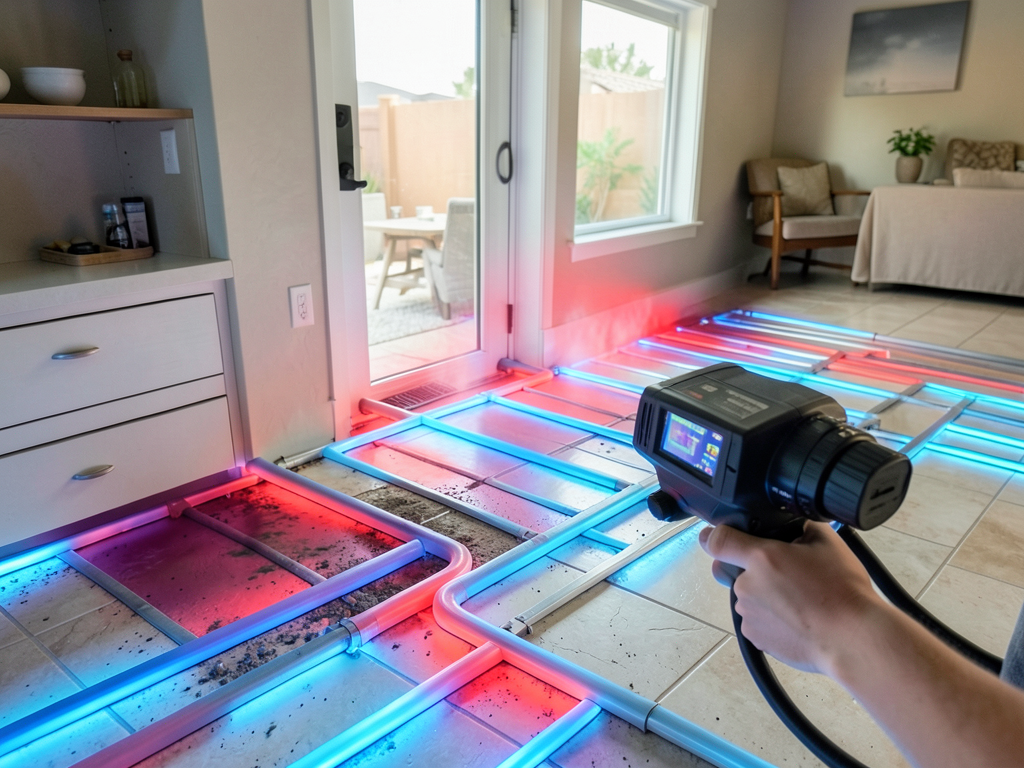
Leak detection in radiant systems requires specialized equipment since tubing runs beneath finished floors. Technicians use thermal imaging cameras to identify temperature anomalies and acoustic listening devices to pinpoint leaks. Most leaks occur at manifold connections or where tubing penetrates concrete not within the tubing itself.
Freeze damage represents the primary failure mode in Central Texas. February 2021’s deep freeze caused widespread radiant system failures when power outages left pumps inactive. Modern systems include battery backup for circulators and freeze protection settings that maintain minimum temperatures during outages. Dealing with Central Texas Hard Water – The Best Water Softener Systems for Steiner Ranch Homes.
Scale buildup from hard water causes the second most common issue. Technicians recommend annual system flushing and descaling using phosphoric acid solutions. This maintenance prevents reduced heat output and extends pump life. Without treatment scale accumulation reduces system efficiency by 5% annually.
Frequently Asked Questions About Austin Floor Heating
Does radiant floor heating work in Texas?
Yes radiant floor heating works effectively in Texas. While winters are mild the system provides comfortable even heat during cold snaps. Most Austin homeowners use radiant systems as supplemental heating rather than primary sources activating them only when temperatures drop below 40°F.
How much does radiant floor heating cost in Austin?
Installation costs range from $12-20 per square foot for hydronic systems in Austin. A typical 2,000-square-foot home costs $24,000-40,000 installed. Operating costs average $1-2 per day during heating season. Electric systems cost less to install but more to operate.
Do I need a permit for radiant floor heating in Austin?
Yes Austin requires permits for radiant floor heating installation. The process involves submitting mechanical plans showing manifold locations boiler specifications and PEX tubing layouts. Inspections verify proper insulation manifold accessibility and backflow prevention device installation per Austin Uniform Plumbing Code Section 607. Plumbing San Marcos.
Can I install radiant heating in my existing home?
Retrofitting radiant heating in existing homes is possible but challenging. Options include thin-slab installations over existing floors or specialized low-profile panels. Both methods increase floor height requiring door adjustments and transition planning. Installation costs typically run 30-50% higher than new construction due to demolition and reconstruction requirements.
How long do radiant floor heating systems last?
Quality hydronic systems last 20-30 years with proper maintenance. PEX tubing carries 25-50 year warranties from manufacturers. Boilers and pumps typically need replacement every 12-15 years. Regular maintenance including system flushing pump lubrication and manifold inspection extends system life significantly.
Making the Right Choice for Your Spicewood Home
Hydronic radiant floor heating offers exceptional comfort and efficiency for Spicewood custom homes but success depends on proper system design and maintenance. The technology integrates seamlessly with modern plumbing systems and provides zone control that matches Austin’s variable climate. However hard water treatment and freeze protection become essential considerations. Plumbing Pflugerville.
For new construction radiant heating offers the best value since installation occurs before flooring installation. Retrofitting works for renovations but requires careful planning around floor height changes and existing infrastructure. The investment typically pays for itself through energy savings and increased home value within 7-10 years.
Before committing schedule a consultation with a licensed hydronic heating specialist who understands Austin’s specific challenges. They can evaluate your home’s slab construction water quality and heating needs to design a system that provides reliable comfort for decades.
Call (737) 316-0588 today to schedule your inspection and learn how radiant floor heating can transform your Spicewood home’s comfort and efficiency.
Local Considerations for Spicewood Homes
Spicewood’s location near Lake Travis creates unique heating challenges. Homes in the 78669 zip code often sit on limestone bedrock which affects heat transfer rates. The Hill Country Galleria area experiences slightly cooler temperatures than downtown Austin due to elevation differences.
Local building practices in Spicewood emphasize energy efficiency. Many custom homes incorporate spray foam insulation and high-performance windows which complement radiant heating systems. The area’s occasional ice storms make freeze protection particularly important for radiant systems.
Water quality varies throughout Spicewood. Homes near Spicewood Vineyards often have higher mineral content in their water supply compared to those closer to Bee Cave. This variation affects system longevity and maintenance requirements.