
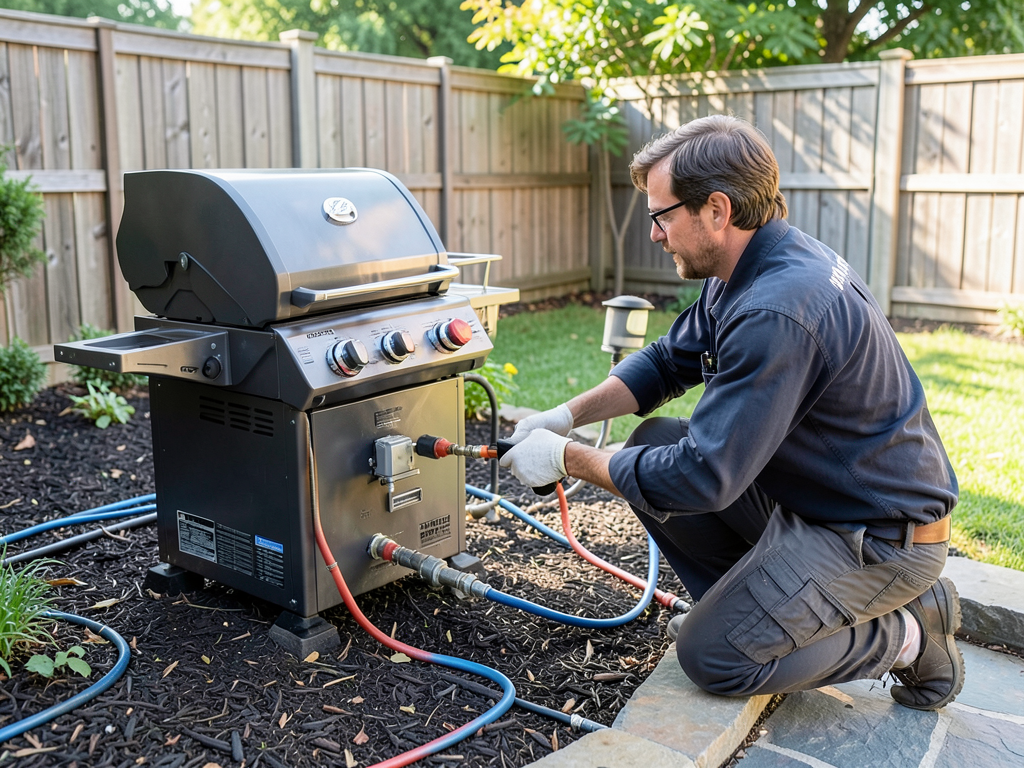
Adding a Sink or Gas Line to Your Rollingwood Outdoor Kitchen
Rollingwood homeowners planning an outdoor kitchen face unique Central Texas challenges. From limestone bedrock to strict Austin plumbing codes, installing a sink or gas line requires more than basic DIY skills. This guide covers everything you need to know before breaking ground, including local permit requirements, soil-specific installation techniques, and freeze protection strategies that protect your investment during those rare but damaging Texas freezes. Dealing with Central Texas Hard Water – The Best Water Softener Systems for Steiner Ranch Homes.
Why Rollingwood Outdoor Kitchen Plumbing Demands Local Expertise
Rollingwood sits on the Edwards Plateau limestone formation. This means excavation is harder than in surrounding areas, and shallow water lines risk damage from tree roots common in neighborhoods near Barton Creek. The City of Austin requires permits for all outdoor plumbing fixtures, and improper gas line installation can create dangerous leaks that insurance may not cover.
Most Rollingwood homes were built between 1960-1990 with slab-on-grade foundations. This construction style means utility lines often run through exterior walls rather than underground, complicating outdoor kitchen hookups. Understanding these local factors prevents costly mistakes and ensures your outdoor kitchen meets both safety standards and your family’s entertaining needs.
Understanding Austin’s Outdoor Kitchen Plumbing Permits
The City of Austin Development Services Department requires permits for any new outdoor water fixture, gas line installation, or drainage modification. For Rollingwood properties, this means submitting detailed plans showing fixture locations, pipe routing, and backflow prevention devices. Professional Drain Cleaning Services to Clear Stubborn Clogs in South Congress Apartments.
Permit processing typically takes 5-7 business days for residential outdoor projects. The International Plumbing Code (IPC) Section 312 governs outdoor fixture installation, requiring frost-proof sill cocks for any exterior water line and proper drainage to prevent standing water near your home’s foundation. Plumbing San Marcos.
Gas line permits follow stricter protocols under IPC Section 1305. Any natural gas line over 2 PSI requires pressure testing and inspection before covering. Rollingwood’s limestone soil makes trenching more labor-intensive, often requiring jackhammering through rock layers just 12-18 inches below grade.
Gas Line Installation for Outdoor Grills and Fire Pits
Running a gas line to your outdoor kitchen involves calculating BTU requirements for each appliance. A standard 36-inch built-in grill needs 40,000-50,000 BTUs, while a pizza oven can require 60,000+ BTUs. Fire pits typically need 60,000-80,000 BTUs depending on size.
Natural gas lines require 1-inch minimum diameter pipe for runs over 50 feet to maintain adequate pressure. Propane systems can use smaller 3/4-inch lines but need different regulators and safety shut-off valves. Texas State Board of Plumbing Examiners mandates licensed plumbers handle all gas line work beyond basic appliance connections.
Installation depth matters in Rollingwood’s freeze-prone climate. Gas lines must sit at least 18 inches below grade, though 24 inches provides better freeze protection. The 2021 Texas freeze showed how shallow lines can rupture when soil temperatures drop below 25°F for extended periods.. Read more about Safe Gas Line Installation for Zilker Patios and Outdoor Fire Pits.
Water Lines and Drainage Solutions for Outdoor Sinks
Outdoor sink installation requires careful planning for both water supply and drainage. Hot and cold water lines need insulation rated for outdoor exposure, and PEX piping offers better freeze resistance than copper in Central Texas conditions. Water Heater Maintenance Tips.
Drainage presents unique challenges in Rollingwood. The area’s slope toward Lake Austin means greywater can’t simply drain onto the ground. Options include connecting to your home’s main sewer line, installing a dry well system, or using a small grease trap for food waste separation.
For homes near the Edwards Aquifer recharge zone, drainage must meet stricter environmental standards. Any system that could contaminate groundwater requires additional filtration or containment measures. Local plumbers familiar with Rollingwood’s environmental sensitivity can design compliant solutions.
Winterization: Protecting Your Austin Outdoor Kitchen
Central Texas may not face Minnesota winters, but the 2021 freeze proved outdoor plumbing needs protection. Rollingwood homes experienced widespread pipe bursts when temperatures stayed below freezing for 72+ hours.
Winterization starts with proper pipe burial depth. Supply lines should sit 18-24 inches deep, with insulation sleeves on any exposed sections. Hose bibs need frost-proof models with integral shut-off valves located inside heated spaces.
For seasonal protection, install quarter-turn ball valves that fully drain when closed. These prevent water from sitting in pipes where it can freeze and expand. Consider heat tape on critical lines if your outdoor kitchen sits in a low spot where cold air settles.
Material Selection for Texas Climate Durability
Choosing the right materials prevents premature failure in Rollingwood’s climate. PEX-A offers the best freeze resistance and flexibility for navigating around tree roots and limestone obstacles. For gas lines, black steel pipe provides durability, though flexible corrugated stainless steel tubing (CSST) offers easier installation in tight spaces.
Outdoor fixtures need UV-resistant materials. Brass and stainless steel resist corrosion better than standard chrome finishes. Look for fixtures specifically rated for outdoor use, as indoor models can degrade quickly in direct sunlight.
Backflow prevention devices protect your home’s water supply from contamination. Austin code requires reduced pressure principle (RPZ) assemblies for outdoor kitchens with multiple fixtures or chemical dispensers like soap dispensers or cleaning stations.
Cost Factors and Budget Planning
Outdoor kitchen plumbing costs vary significantly based on site conditions. Simple sink installations start around $1,500-2,000, while comprehensive gas and water systems with multiple appliances can exceed $8,000-10,000.
Key cost drivers include excavation difficulty (limestone increases labor costs by 30-50%), permit fees ($150-300), and the number of fixtures. Running gas lines under existing concrete patios adds $500-1,000 for concrete cutting and repair.
DIY plumbing saves money initially but risks code violations that can cost thousands to correct. Insurance companies often deny claims for damage caused by unpermitted work, making professional installation a worthwhile investment for Rollingwood’s high-value properties.
Common Installation Mistakes to Avoid
Homeowners often underestimate the complexity of outdoor kitchen plumbing. Common mistakes include inadequate slope for drainage (must be 1/4 inch per foot minimum), using indoor-rated materials outdoors, and failing to account for soil expansion and contraction.
Another frequent error involves gas line sizing. Undersized pipes create pressure drops that cause burner flames to weaken or go out. Always calculate total BTU load and consult gas supply charts before finalizing pipe diameters.
Ignoring local codes leads to failed inspections and costly rework. Austin inspectors specifically check for proper trap seals, adequate venting, and correct gas line pressure testing documentation. Skipping these steps means your outdoor kitchen won’t pass final inspection.
Finding the Right Plumber for Your Rollingwood Project
Not all plumbers handle outdoor kitchen installations. Look for professionals with specific experience in gas line work and outdoor fixture installation. Verify current Texas plumber licensing through the Texas State Board of Plumbing Examiners website.
Ask potential contractors about their experience with Rollingwood’s limestone soil conditions. Those familiar with the area understand the excavation challenges and can provide more accurate estimates. Request references from similar outdoor kitchen projects in West Lake Hills or nearby neighborhoods. How to Tell if Your West Lake Hills Home Has a Slab Leak (And Who to Call for Repairs).
Professional plumbers should provide detailed written estimates showing permit costs, material specifications, and project timelines. Be wary of vague quotes or contractors who suggest skipping permits to save money.
Maintenance and Long-Term Care
Outdoor kitchen plumbing requires regular maintenance to prevent problems. Annual inspections should check for leaks, corrosion, and proper fixture operation. Clean aerators and spray heads seasonally to prevent mineral buildup from Austin’s hard water.
Gas line connections need periodic tightening as pipes expand and contract with temperature changes. Look for signs of corrosion on fittings, especially in areas exposed to pool chemicals or cleaning products.
Before winter, test all shut-off valves and drainage systems. Replace any deteriorated insulation and clear debris from around fixtures to ensure proper drainage during heavy rains common in Central Texas.
Frequently Asked Questions
Do I need a permit for an outdoor kitchen sink in Rollingwood?
Yes. The City of Austin requires permits for all new outdoor plumbing fixtures, including sinks. This ensures proper installation and compliance with local codes.
How deep should gas lines be buried in Rollingwood?
Gas lines must be at least 18 inches deep, though 24 inches provides better freeze protection. Rollingwood’s limestone soil may require deeper excavation in some areas.
Can I use PEX piping for outdoor water lines?
Yes, PEX-A is excellent for outdoor use due to its freeze resistance and flexibility. It handles Central Texas temperature swings better than copper.
What happens if I skip the permit process?
Unpermitted work can result in fines, failed inspections, and insurance claim denials. You may also face issues when selling your home if unpermitted modifications are discovered.
How long does installation typically take?
Most outdoor kitchen plumbing projects take 2-4 days for installation, plus permit processing time. Complex gas line runs may require additional time.
Should I winterize my outdoor kitchen even in Austin?
Yes. The 2021 freeze demonstrated that Central Texas can experience severe cold snaps. Proper winterization prevents costly pipe bursts and fixture damage.
What’s the difference between natural gas and propane for outdoor kitchens?
Natural gas offers unlimited supply and lower operating costs but requires permanent line installation. Propane provides flexibility but needs tank refills and has higher fuel costs.
Ready to Start Your Outdoor Kitchen Project?
Adding a sink or gas line to your Rollingwood outdoor kitchen requires careful planning and professional installation. The unique soil conditions, strict Austin codes, and climate considerations make this more complex than standard indoor plumbing projects.
Don’t risk costly mistakes or code violations. Our licensed plumbers understand Rollingwood’s specific challenges and can ensure your outdoor kitchen meets all safety standards while providing years of reliable service.
Call (737) 316-0588 today to schedule your consultation. We’ll assess your property, explain permit requirements, and provide a detailed estimate for your outdoor kitchen plumbing needs. Your dream outdoor kitchen is just one call away.
Don’t wait until the next freeze damages your investment. Pick up the phone and call (737) 316-0588 before the next storm hits. Our team is ready to help you create the perfect outdoor kitchen for your Rollingwood home.