
The Right Way to Flush Your Water Heater (and Why North Austin Homeowners Shouldn’t Skip It)
North Austin homeowners face a unique challenge: our water contains some of the highest mineral content in Central Texas. With calcium levels averaging 180-220 parts per million from the Edwards Aquifer, sediment builds up in your water heater tank twice as fast as in other regions. This buildup doesn’t just reduce efficiency—it can cut your water heater’s lifespan from 12 years to as little as 6-8 years if left unchecked. Austin Water Utility.
Flushing your water heater annually removes this sediment, restores heating efficiency, and prevents the popping sounds that signal serious buildup. The process takes about 60-90 minutes and requires basic tools most homeowners already own. However, the steps differ slightly between gas and electric models, and safety precautions are critical when handling 120-140°F water. Water Heater Maintenance Tips.
Safety First: Essential Precautions Before You Begin
Before touching any part of your water heater, understand that you’re working with extremely hot water under pressure. A single mistake can cause severe burns or flood your home. Turn off the power at the circuit breaker for electric models, or set the gas valve to “pilot” for gas units. Allow the tank to cool for at least 2-3 hours before starting.. Read more about Getting Hot Water Faster with a Recirculating Pump in Davenport Ranch.
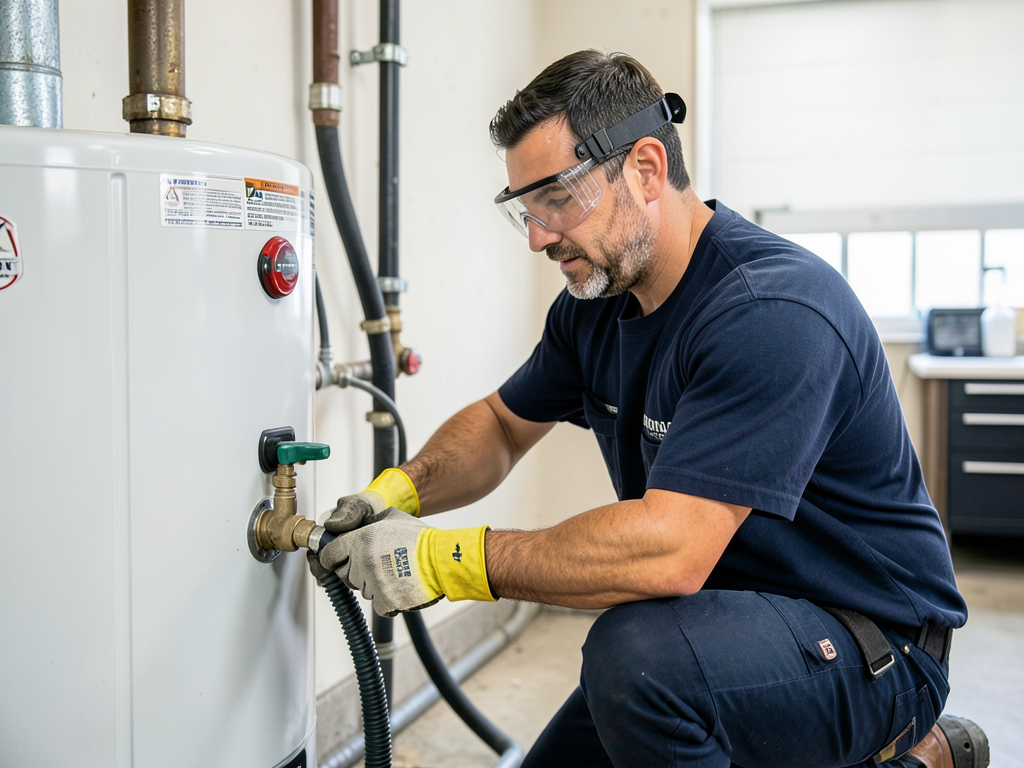
Wear heavy-duty gloves and eye protection. Keep children and pets away from the work area. Have a flashlight ready—you’ll need to see the drain valve clearly. If you smell gas at any point, stop immediately and call your utility company from outside your home. Professional Drain Cleaning Services to Clear Stubborn Clogs in South Congress Apartments.
- Turn Off the Heat Source
For electric heaters, flip the dedicated breaker at your main panel. For gas units, turn the control knob to “pilot”—this keeps the pilot light burning but prevents the burner from firing. Never attempt to flush a water heater while it’s actively heating.. Read more about Why Your Tankless Water Heater Needs Professional Descaling to Stay Under Warranty.
- Shut Off the Cold Water Supply
Locate the cold water shut-off valve on the pipe entering the top of your heater. Turn it clockwise until it stops. This prevents new water from entering the tank while you’re draining it.. Read more about The Real Cost of Converting from a Gas to an Electric Water Heater in Austin.
- Connect the Garden Hose
Attach a standard garden hose to the drain valve near the bottom of the tank. Route the other end to a floor drain, bathtub, or outside—never to a sink or toilet, as sediment can clog plumbing. If you don’t have a suitable drain location, use a large bucket and prepare to empty it frequently. EPA WaterSense guidelines.
- Open a Hot Water Faucet
Turn on a hot water faucet somewhere in your house. This prevents a vacuum from forming in the pipes and allows the tank to drain completely. Leave this faucet open throughout the entire process.
- Open the Drain Valve
Slowly open the drain valve by turning it counterclockwise. Rusty or milky water indicates significant sediment buildup. Let the tank drain completely—this usually takes 20-30 minutes for a 40-gallon unit. If water stops flowing, sediment may be blocking the valve.
- Flush the Tank
Once empty, briefly turn the cold water supply back on for 30 seconds, then off again. This stirs up remaining sediment. Repeat this process 2-3 times until the water runs clear. For severe buildup, you may need to repeat this step 4-5 times.
- Close Valves and Refill
Close the drain valve tightly. Remove the hose. Turn the cold water supply back on and watch the open hot water faucet—when water flows steadily without sputtering, the tank is full. Only then should you restore power or turn the gas back to “on.”
Why North Austin’s Water Makes Flushing Critical
The Edwards Aquifer, which supplies most of Austin’s water, contains dissolved limestone that breaks down into calcium carbonate. This mineral precipitates out when water is heated, forming a rock-like scale on the bottom of your tank. In North Austin neighborhoods like Wells Branch and Jollyville, water hardness often exceeds 15 grains per gallon—well above the national average of 7-10.
This scale acts as an insulator between the burner and the water, forcing your heater to work harder and longer. You’ll notice higher energy bills, longer wait times for hot water, and that characteristic popping sound as steam bubbles burst through the sediment layer. Left untreated, this scale can cause the lower heating element in electric models to fail completely.
Gas vs. Electric: Key Differences in the Flushing Process
Gas water heaters require extra attention to the pilot light. After flushing, you must turn the gas control from “pilot” to “on” and listen for the burner to ignite. If you don’t hear it within 30 seconds, check that the gas valve is fully open and that you didn’t accidentally turn off the main gas supply.
Electric models have a critical step many homeowners miss: you must ensure the tank is completely full before restoring power. Turning on an empty electric heater instantly burns out the upper heating element, requiring expensive replacement. Watch your open hot water faucet until the flow is steady and bubble-free before flipping the breaker back on.
Tools and Materials You’ll Need
Standard garden hose (50 feet minimum)
Adjustable wrench
Heavy-duty work gloves
Safety glasses
Flashlight
5-gallon bucket (for sediment collection)
Old towels or rags
Teflon tape (in case you need to reseal drain valve)
Warning Signs: When to Call a Professional
Not every water heater problem can be solved with a simple flush. Call (737) 316-0588 immediately if you notice these symptoms:
Water leaking from the tank base indicates internal corrosion—the tank has likely failed and needs replacement. Popping sounds that persist after flushing suggest severe scale buildup requiring professional descaling. Rusty water from all taps points to a failing anode rod or tank corrosion. If the drain valve won’t open or leaks after closing, it may need replacement.
Gas models that won’t relight after flushing could have a faulty thermocouple. Electric units that trip the breaker repeatedly after flushing may have a short in the heating element. These issues require specialized tools and expertise to repair safely.
Maintenance Schedule for Austin’s Hard Water
Most manufacturers recommend annual flushing, but North Austin’s extreme hardness means you should flush every 6-8 months for optimal performance. Homes with water softeners still need annual maintenance, as softeners don’t remove all minerals and can actually accelerate anode rod consumption.
Mark your calendar for spring and fall maintenance—avoiding the peak summer and winter months when your heater works hardest. Combine flushing with checking the temperature and pressure relief valve, which should lift easily and snap back when released. This valve prevents dangerous pressure buildup and should be tested annually.
The Anode Rod Connection
Every water heater contains an aluminum or magnesium anode rod that sacrifices itself to protect the tank from corrosion. In Austin’s mineral-rich water, these rods corrode 30-40% faster than in softer water regions. A depleted anode rod leaves your tank vulnerable to rust-through, typically within 12-18 months.
Check your anode rod every 12 months. If it’s less than 1/2 inch thick or completely coated with calcium, replace it. This simple $50-80 part can extend your tank’s life by 3-5 years. Many North Austin homeowners combine anode rod inspection with their bi-annual flushing schedule.
Energy Efficiency Benefits
A clean water heater operates 20-30% more efficiently than a scaled unit. For a typical 40-gallon electric heater, this translates to $8-12 monthly savings on your electric bill. Gas units show similar improvements, with faster recovery times meaning less wasted water waiting for hot water to reach your taps.
Beyond cost savings, efficient operation reduces your carbon footprint. A well-maintained heater produces less CO2 and reduces strain on the electrical grid during peak demand periods. Many Austin Energy customers qualify for efficiency rebates when they can demonstrate regular maintenance.
Professional vs. DIY: Making the Right Choice
DIY flushing works well for homeowners comfortable with basic maintenance and who understand the safety precautions. However, professional service includes tank inspection, anode rod assessment, and proper disposal of the flushed water—which can contain high mineral concentrations harmful to plants and waterways.
Professional flushing typically costs $150-250 in Austin and includes a comprehensive safety check. For tankless water heaters, which are increasingly common in new North Austin developments, professional descaling is mandatory as DIY methods can damage the heat exchanger. Tankless units require specialized descaling solution and pump equipment. Is Switching to a Tankless Water Heater Worth It for Your Cedar Park Home?.
Common Mistakes to Avoid
Never turn the water heater on before the tank is completely full—this destroys heating elements. Don’t overtighten the drain valve when closing it; this can crack the plastic or brass fitting. Never flush into a toilet or sink; sediment will clog the smaller drain lines.
Avoid using harsh chemical cleaners in your water heater. These can damage the tank lining and contaminate your water supply. Don’t ignore small leaks after flushing; a properly sealed drain valve should not drip at all. If you’re unsure about any step, call a professional rather than risk flooding or injury.
Frequently Asked Questions
How long does a water heater flush take?
The entire process typically takes 60-90 minutes, including cooling time. Draining alone takes 20-30 minutes for a standard 40-gallon tank.
Can I flush my water heater if it’s still under warranty?
Yes, annual flushing is usually required to maintain your warranty. Keep records of maintenance, as some manufacturers require professional service for warranty claims.
What if my drain valve is completely clogged?
A clogged drain valve often indicates severe sediment buildup. You’ll need to replace the valve, which requires turning off your home’s main water supply. This is a job for a professional plumber.
How much money can I save by flushing my water heater?
A clean, efficient water heater can save $100-150 annually on energy bills. It also prevents premature replacement, which can cost $1,200-2,500 for a standard unit in Austin.
Take Action Before Problems Start
Don’t wait for popping sounds, rusty water, or cold showers to remind you about water heater maintenance. North Austin’s hard water makes annual (or semi-annual) flushing essential for protecting your investment and ensuring reliable hot water.
If you’re unsure about any step in the process, or if your water heater shows signs of trouble, call (737) 316-0588 today. Our licensed plumbers serve North Austin neighborhoods including Wells Branch, Jollyville, and Anderson Mill, providing same-day service for maintenance and repairs. Don’t let sediment steal years from your water heater—schedule your flush now and enjoy worry-free hot water all year long.
Pick up the phone and call (737) 316-0588 before the next cold front hits. Your water heater works hardest during temperature extremes, and proper maintenance now prevents emergency repairs later. Finding an Emergency Plumber in Austin Who Actually Answers the Phone at 3 AM.