
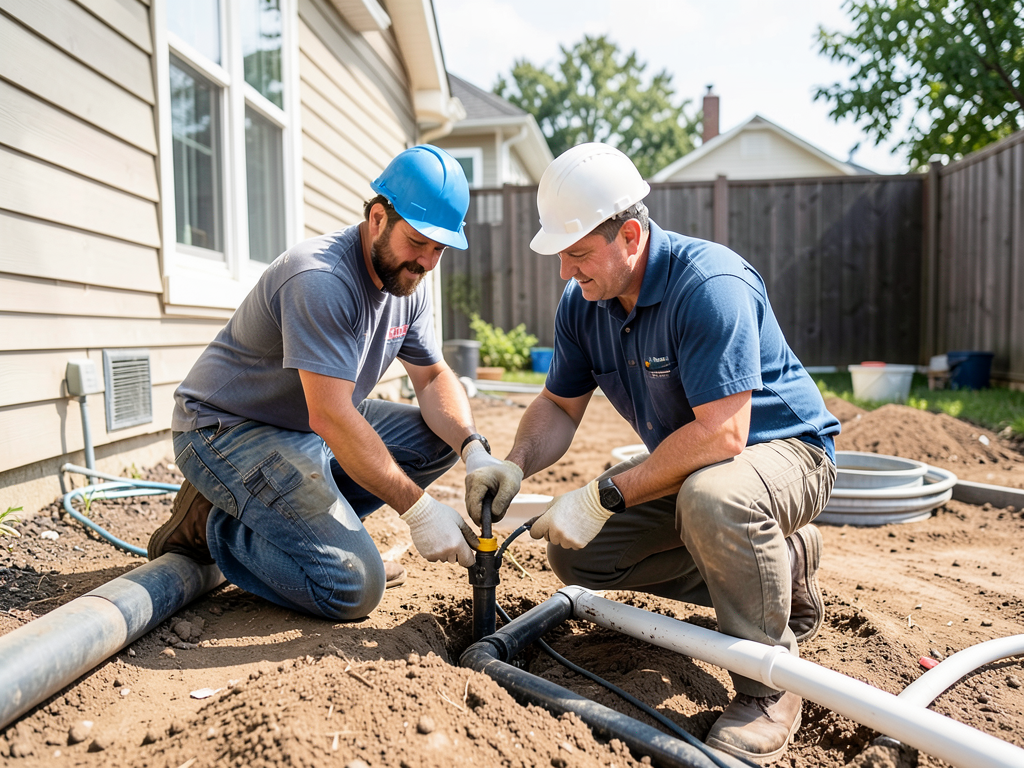
Building an Accessory Dwelling Unit (ADU) in your South Lamar backyard requires careful plumbing planning to meet Austin’s strict codes and avoid costly mistakes. The City of Austin Development Services Department and Austin Water Utility have specific requirements for ADU water and sewer connections that differ from standard home additions. City of Austin Development Services Department.
Before breaking ground you need to understand how Austin’s HOME Initiative affects your project. This 2023 ordinance allows more ADUs but requires separate utility connections for most secondary units. Your ADU plumbing must comply with the 2024 Uniform Plumbing Code amendments adopted by Austin which include specific pipe sizing backflow prevention and sewer cleanout requirements. Austin Water Utility.
The first step is determining whether your ADU needs a separate water meter or can share your home’s existing line. Austin Water Utility typically requires separate meters for ADUs to track usage accurately and maintain billing integrity. This means you’ll need to budget for meter installation fees and potentially upgrade your water service line from the street to handle the additional demand. Water Heater Maintenance Tips.
Understanding Austin’s ADU Plumbing Codes (2024 Update)
Austin’s 2024 plumbing code amendments specifically address ADU construction in established neighborhoods like South Lamar. The code requires minimum 3/4-inch water service lines for ADUs even when they’re small efficiency units. For sewer connections you must maintain a minimum 2% slope on drain lines and provide a cleanout within 5 feet of the building’s foundation. Professional Drain Cleaning Services to Clear Stubborn Clogs in South Congress Apartments.
The City of Austin now mandates backflow prevention assemblies on all ADU water connections. This device prevents contaminated water from flowing back into the city’s supply system. You’ll need to install a reduced pressure principle assembly (RPZ) if your ADU has irrigation or a swimming pool which many South Lamar properties include.. Read more about Choosing Between PEX A and PEX B for Your Next Austin Plumbing Project.
Travis County’s expansive clay soil creates unique challenges for ADU plumbing. The soil expands when wet and contracts when dry causing pipes to shift and potentially break. All Pro Plumbing recommends Schedule 40 PVC for underground water lines and Schedule 40 or SDR-35 for sewer lines to withstand this movement. These pipes have thicker walls than standard Schedule 20 providing better durability in Austin’s soil conditions. Plumbing San Marcos.
The HOME Initiative: How Austin’s New Laws Impact Your ADU Plumbing
The HOME Initiative (Home Options for Middle-Income Empowerment) allows homeowners to build ADUs on most single-family lots in Austin. However this law requires separate utility connections for ADUs on lots smaller than 7000 square feet. Your South Lamar property likely falls into this category meaning you’ll need dedicated water and sewer lines from the street to your ADU.
Under the HOME Initiative Austin Water Utility charges impact fees for new ADU connections. These fees help fund system upgrades needed to serve increased density. The current impact fee structure includes a $2500 water meter installation fee and a $3200 sewer tap fee for ADUs. These costs are separate from your construction budget and must be paid before Austin Water will approve your permit.
The initiative also affects your property’s utility infrastructure. If your home was built before 1980 you may have a shared sewer lateral that connects multiple homes. Austin Water requires separate laterals for ADUs which means you might need to install a new sewer line from your property line to the main sewer. This can add $4000-$8000 to your project depending on the distance and soil conditions.
Key Requirements for Sewer and Water Line Connections
Water line installation requires careful planning to avoid future problems. Austin’s building code mandates a minimum 18-inch depth for buried water lines to prevent freezing damage. However in South Lamar’s blackland prairie clay we recommend 24-inch depth to account for soil movement. The pipe must be bedded in sand to prevent sharp rocks from damaging the line over time.
Sewer line installation follows different rules. The Uniform Plumbing Code requires a minimum 4-inch diameter sewer main for ADUs even if you’re only installing a bathroom and kitchenette. The line must maintain a 2% slope (2 inches of drop per 8 feet of run) to ensure proper drainage. For properties with significant elevation changes this might require deeper trenching or even a sewage ejector pump.
Backflow prevention is critical for ADU plumbing in Austin. The city requires a testable backflow preventer on the water service line if your ADU has any of these features: irrigation system swimming pool or commercial-grade kitchen equipment. This device must be tested annually by a certified tester and you’ll receive a violation notice if testing isn’t completed on time.
Austin Water Utility: Separate Meters vs. Shared Lines
Most South Lamar ADUs require separate water meters from Austin Water Utility. The utility company charges a one-time meter installation fee of $2500 for standard residential meters. If your ADU needs a larger meter (3/4-inch or 1-inch) due to multiple fixtures or irrigation the fee increases to $3500-$4500.
Shared water lines between your main house and ADU are only allowed in specific circumstances. Austin Water permits shared service if your ADU is under 400 square feet and doesn’t have a full kitchen. However even in these cases you must install a sub-meter to track ADU water usage separately for billing purposes.
The decision between separate and shared meters affects your long-term costs. Separate meters allow you to rent your ADU without including water in your rent giving you more flexibility as a property owner. However you’ll pay two monthly meter fees instead of one. The break-even point is typically 3-5 years depending on your rental rates and water usage patterns.
The Permitting Process: Working with the City of Austin Development Services
Obtaining permits for ADU plumbing in Austin requires submitting detailed plans to the Development Services Department. You’ll need a plumbing permit which costs $350-$550 depending on the project scope. The permit application must include pipe sizing calculations fixture unit counts and backflow prevention device specifications.
The permitting process includes two required inspections. The first is the rough-in inspection which occurs after you’ve installed water and sewer lines but before covering walls or pouring concrete. The inspector checks pipe slopes support spacing and cleanout locations. The second is the final inspection which verifies all fixtures are properly installed and connected.
Permit processing times vary by season. During peak construction months (March through June) expect 3-4 weeks for initial review. Off-season reviews take 1-2 weeks. You can expedite the process by hiring a licensed Texas Master Plumber to prepare your plans as they understand the specific requirements that trigger plan review comments. Texas State Board of Plumbing Examiners.
Common Plumbing Pitfalls in Austin ADU Conversions
One common mistake is underestimating the impact of Austin’s hard water on ADU plumbing. The Edwards Aquifer which supplies most of Austin’s water has a hardness of 150-300 parts per million. This mineral content causes scale buildup in tankless water heaters and reduces pipe diameter over time. Installing a whole-house water softener for your ADU prevents these issues and extends fixture life. Is Switching to a Tankless Water Heater Worth It for Your Cedar Park Home?.
Another pitfall is failing to account for soil movement in your plumbing design. Travis County’s clay soil expands up to 30% when wet putting tremendous pressure on buried pipes. Standard installation methods that work in other regions fail here. All Pro Plumbing uses flexible couplings and expansion joints at key connection points to accommodate this movement.
Many homeowners forget about future maintenance access. The City of Austin requires cleanouts every 100 feet of horizontal drain line and at direction changes. However we recommend placing cleanouts at 50-foot intervals in ADUs because they make clog removal much easier. A $200 cleanout installation now can save you $500-$1000 in emergency service calls later. Finding an Emergency Plumber in Austin Who Actually Answers the Phone at 3 AM.
Estimated Costs for ADU Plumbing in Central Texas
ADU plumbing costs in South Lamar typically range from $8000 to $18000 depending on the complexity of your project. A basic ADU with one bathroom and a small kitchen falls at the lower end of this range. Adding features like a dishwasher washing machine or outdoor shower increases costs significantly.
Water line installation costs vary based on distance from the street. For a typical 50-foot run from the water main to your ADU expect to pay $2500-$3500 for excavation pipe installation and connection. If your property requires boring under existing structures or driveways add $1000-$2000 for this specialized work.
Sewer line installation costs follow similar patterns. A 40-foot sewer line installation costs $2000-$3000 while longer runs or those requiring deep trenching can exceed $5000. You’ll also need to budget for permit fees ($350-$550) impact fees ($5700 for water and sewer) and backflow prevention devices ($300-$800 installed).
Choosing the Right Plumbing Fixtures for Your ADU
Fixture selection impacts both your upfront costs and long-term utility bills. Low-flow toilets and showerheads are mandatory in Austin ADUs under the city’s water conservation ordinance. These fixtures use 1.28 gallons per flush compared to older models that use 3.5 gallons saving thousands of gallons annually.
For water heaters tankless models make sense in most ADUs because they save space and energy. A 7-9 gallon-per-minute tankless heater costs $800-$1200 and provides endless hot water for one or two people. However they require proper venting and may need a larger gas line or electrical circuit.
Kitchen fixtures should prioritize durability over style. Stainless steel sinks resist hard water stains better than porcelain and commercial-grade faucets with ceramic disc valves last longer than cheaper models. For ADUs that will be rented choose fixtures with limited adjustability to prevent tenant damage.
Preparing for the Rough-In Inspection
The rough-in inspection is your first major hurdle in the ADU plumbing process. The inspector checks that all pipes are properly supported sloped and sized according to code. They verify that cleanouts are accessible and that backflow prevention devices are installed correctly.
Common reasons for rough-in inspection failures include insufficient pipe supports incorrect slope on drain lines and missing cleanouts. Pipes must be supported every 4 feet for horizontal runs and every 10 feet for vertical stacks. Drain lines require a minimum 1/4-inch per foot slope though 2% (1/8-inch per foot) is preferred for optimal flow.
Before scheduling your rough-in inspection perform a pressure test on all water lines. This test involves capping all openings and pressurizing the system to 100 PSI for 15 minutes. Any pressure drop indicates a leak that must be repaired before inspection. This simple test can prevent the embarrassment of a failed inspection.
Final Inspection and Occupancy
The final plumbing inspection occurs after all fixtures are installed and connected. The inspector verifies that faucets don’t leak toilets flush properly and drains empty without backing up. They also check that all required permits are displayed and that the work matches the approved plans.
Once you pass final inspection you can apply for your Certificate of Occupancy from the Development Services Department. This document is required before you can legally use your ADU. The certificate costs $300-$500 and takes 2-3 business days to process after all inspections are complete.
Don’t forget about ongoing maintenance requirements. Austin requires annual testing of backflow prevention devices and your water meter must be accessible for reading. Consider installing a water monitoring system that alerts you to unusual usage patterns which can indicate leaks before they cause major damage.
Working with a Licensed Texas Master Plumber
ADUs require a licensed Texas Master Plumber to pull permits and oversee the work. This license ensures your plumber understands Austin’s specific code requirements and can navigate the permitting process efficiently. All Pro Plumbing holds a current Texas Master Plumber license (#M-38275 which you can verify with the Texas State Board of Plumbing Examiners).
A licensed plumber also provides warranty protection for their work. Most offer a one-year warranty on labor and pass through manufacturer warranties on fixtures and pipes. This protection is valuable because plumbing failures often occur months after installation when contractors are difficult to reach.
Professional plumbers also understand the hidden aspects of ADU construction. They know which pipes can run through exterior walls without freezing how to protect pipes from soil movement and which fixtures work best with Austin’s water quality. This expertise prevents the costly callbacks that often plague DIY or handyman plumbing work.
Frequently Asked Questions
How long does ADU plumbing take from start to finish?
Most ADU plumbing projects take 2-3 weeks for installation plus 4-6 weeks for permitting and inspections. The total timeline from permit application to final inspection is typically 8-12 weeks though this can extend during busy construction seasons.
Can I use my existing water line for the ADU?
You can only share your existing water line if your ADU is under 400 square feet and lacks a full kitchen. Even then Austin Water requires a sub-meter for billing purposes. Most ADUs need separate water service lines to meet code requirements.
What happens if my ADU plumbing fails inspection?
If your plumbing fails inspection you’ll receive a written notice listing the deficiencies. You must correct these issues and request a re-inspection which costs $75-$150. Common failures include incorrect pipe sizing missing cleanouts and improper backflow prevention installation.
Do I need a permit for ADU plumbing in Austin?
Yes you must obtain a plumbing permit from the City of Austin Development Services Department for any ADU plumbing work. The permit ensures your work meets safety standards and is inspected by city officials. Unpermitted work can result in fines and may need to be redone.
How much does ADU plumbing cost in South Lamar?
ADU plumbing costs in South Lamar range from $8000 to $18000 depending on the size and features of your unit. This includes all pipes fixtures permit fees and impact charges. Complex installations with long runs or difficult soil conditions can exceed $20000.