
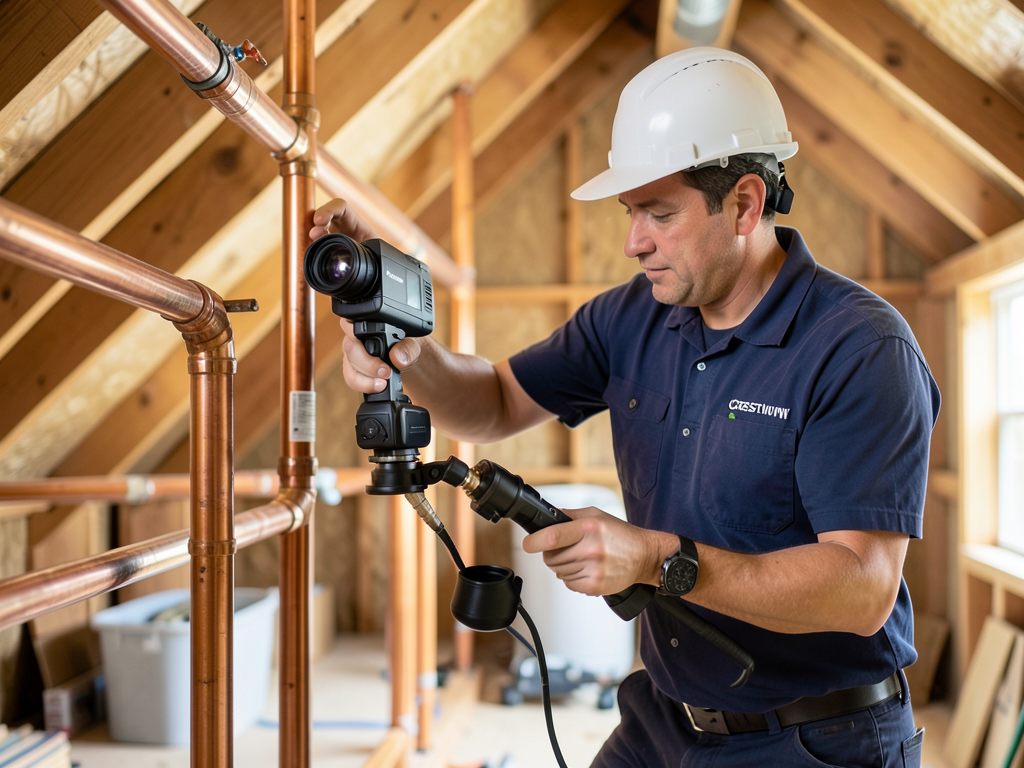
Replacing the Old Copper Pipes in Your Crestview Home (A Guide to Whole-House Repiping)
Copper pipes in Austin homes built before 2000 are reaching the end of their lifespan. The mineral-rich water from the Edwards Aquifer combined with the region’s temperature swings creates a perfect storm for corrosion and pinhole leaks. If your Crestview home shows signs of discolored water, low pressure, or frequent leaks, it’s time to consider whole-house repiping before a major failure occurs. Edwards Aquifer Authority.
Whole-house repiping replaces all the existing water supply lines in your home with new durable piping. This process eliminates the risk of catastrophic leaks and restores full water pressure. Most Crestview homes built between 1960 and 1990 used copper piping that’s now 35 to 65 years old. These pipes have endured decades of Austin’s hard water, which contains high levels of calcium and magnesium that slowly eat away at copper over time. Water Heater Maintenance Tips.
The repiping process typically takes 2 to 4 days for a standard Crestview home. Our team works in sections to minimize water disruption, usually completing bathrooms and kitchens first so you maintain partial functionality throughout the project. We install new PEX or copper piping behind walls and under floors, then connect to your existing fixtures and the main water line.. Read more about Luxury Fixture Installation and Plumbing Upgrades for Tarrytown Home Renovations.
Permits are required for whole-house repiping in Austin. The City of Austin Development Services Department reviews plans to ensure new piping meets current plumbing codes, including proper support spacing and insulation requirements. After installation, we coordinate inspections to verify the work meets all local standards. City of Austin Plumbing Code.
Most homeowners in Crestview choose PEX piping for its flexibility and resistance to scale buildup. PEX handles Austin’s temperature fluctuations better than copper and costs less to install. However, some prefer copper for its proven track record and potential resale value. The choice depends on your budget, home age, and long-term plans.. Read more about Upgrading Your East Austin Bungalow to an Energy Efficient Hybrid Water Heater.
During repiping, we protect your home’s interior with drop cloths and dust barriers. Our technicians cut access holes only where necessary and patch them cleanly afterward. We also test all new connections under pressure before completing the job to ensure leak-free performance.. Read more about Why Your Allandale Home Has Low Water Pressure and How We Can Fix It.
The investment in whole-house repiping typically ranges from $4,000 to $12,000 for Crestview homes, depending on square footage and the number of fixtures. While this represents a significant expense, it prevents costly water damage repairs and provides peace of mind for years to come.. Read more about Preventing Water Damage with a Smart Leak Detection System in Your Travis Heights Home.
Hard water in Austin accelerates pipe deterioration. The Edwards Aquifer’s mineral content creates scale buildup inside pipes, reducing water flow and creating pressure points where leaks develop. Homes near Airport Boulevard and Justin Lane often experience harder water than those closer to downtown, making repiping a smart preventative measure for many Crestview residents.. Read more about Replacing Corroded Cast Iron Pipes in Historic Hyde Park Homes.
Early warning signs include rusty or blue-green water, especially when first turning on a faucet, water pressure that fluctuates between fixtures, and visible corrosion on exposed pipes in basements or crawl spaces. If you notice any of these issues, call us at (737) 316-0588 to schedule an inspection before a major leak occurs.
Call (737) 316-0588 today to schedule your free whole-house repiping assessment. We’ll inspect your current plumbing, discuss material options, and provide a detailed quote with no obligation. Plumbing San Marcos.
Common Signs Your Crestview Home Needs Repiping
Understanding the warning signs helps you act before a plumbing emergency strikes. Here are the most common indicators that your Crestview home’s pipes need replacement. Finding an Emergency Plumber in Austin Who Actually Answers the Phone at 3 AM.
Discolored water that appears brown, yellow, or blue-green signals internal pipe corrosion. This discoloration often worsens after the home has been vacant for a few days, as stagnant water sits in deteriorating pipes. The minerals in Austin’s water react with aging copper, creating these color changes that indicate advanced deterioration.
Recurring leaks in different areas of your home suggest systemic pipe failure rather than isolated problems. If you’ve had multiple leak repairs in the past two years, the entire system is likely compromised. Each repair only addresses one weak point while others continue deteriorating behind walls.
Low water pressure that varies between fixtures points to scale buildup or corrosion restricting water flow. You might notice good pressure in one bathroom but barely a trickle in another. This inconsistency indicates partial blockages throughout your piping system that only complete replacement can solve.
Visible corrosion on exposed pipes, especially around joints and fittings, shows the pipe material is breaking down. Look for green deposits on copper pipes or rust on galvanized steel. These surface problems indicate internal deterioration that’s much worse than what you can see.
Frequent plumbing repairs and rising water bills often accompany failing pipes. Small, hidden leaks waste water continuously, showing up as unexplained increases in your monthly bill. The cost of repeated service calls adds up quickly, making repiping the more economical long-term solution. Plumbing Pflugerville.
Strange noises from pipes, including banging, whistling, or humming, can indicate loose connections or water hammer from deteriorating pipes. These sounds often occur when multiple fixtures are used simultaneously, revealing weak points in your plumbing system.
Older homes near Crestview’s historic core may have additional concerns. Some properties built before 1970 used galvanized steel pipes that rust from the inside out, creating severe flow restrictions and eventual complete blockages. These pipes often look fine externally while being completely corroded internally.
Call (737) 316-0588 if you notice any of these warning signs. Early detection prevents water damage and saves money on emergency repairs.
Our Austin Repiping Process From Inspection to Clean-up
Whole-house repiping requires careful planning and execution to minimize disruption to your daily life. Here’s exactly what to expect when you choose our team for your Crestview home repiping project.
Step one involves a comprehensive plumbing inspection using video camera technology to examine your existing pipes. We insert a small camera through cleanouts and fixtures to assess pipe condition, identify problem areas, and determine the best routing for new pipes. This diagnostic process typically takes 1 to 2 hours and provides a clear picture of your system’s health.
During the inspection, we also check water pressure, test for leaks using acoustic detection equipment, and evaluate your home’s water quality. We measure water hardness and check for other contaminants that might affect pipe longevity. This data helps us recommend the best piping materials for your specific situation.
Once we complete the inspection, we create a detailed repiping plan showing exactly where new pipes will run. We mark access points on walls and ceilings, identify any structural considerations, and coordinate with other contractors if you’re doing simultaneous renovations. You’ll receive a written proposal with material options, timeline estimates, and a clear breakdown of the work involved.
Permit acquisition follows approval of the repiping plan. We handle all permit applications with the City of Austin Development Services Department, including submitting detailed drawings and specifications. The permitting process typically takes 3 to 5 business days, during which we prepare materials and schedule the installation crew.
Installation day begins with setting up protective barriers to contain dust and debris. We cover furniture, seal off work areas, and establish containment zones to protect your living spaces. Our team brings all necessary materials and equipment to complete the job without delays.
We work systematically through your home, starting with the main water line connection and moving room by room. Most Crestview homes allow us to run new pipes through attics or crawl spaces, minimizing wall cuts. When wall access is necessary, we cut cleanly and patch professionally after installation. Professional Drain Cleaning Services to Clear Stubborn Clogs in South Congress Apartments.
Throughout the process, we maintain water service to at least one bathroom and the kitchen. We typically complete one bathroom fully before moving to the next area, ensuring you always have functional facilities. The main water shut-off usually lasts only 4 to 6 hours per day.
After installing all new piping, we pressure test the entire system for 24 hours to verify leak-free performance. We check every connection, valve, and fixture under working pressure to ensure quality installation. Any issues discovered during testing are corrected immediately.
The final step involves patching all access holes, painting or texturing to match existing surfaces, and thorough clean-up. We remove all debris, vacuum work areas, and conduct a final walk-through with you to ensure complete satisfaction. We also provide documentation of the new system, including material warranties and maintenance recommendations.
Call (737) 316-0588 to schedule your comprehensive repiping inspection. We’ll show you exactly what’s happening inside your pipes and provide a clear path forward.
PEX vs. Copper Which is Right for Your Texas Home
Choosing between PEX and copper piping affects your repiping project’s cost, timeline, and long-term performance. Here’s how these materials compare specifically for Austin homes.
PEX (cross-linked polyethylene) has become the preferred choice for most Austin repiping projects due to its flexibility and resistance to scale buildup. PEX handles Austin’s temperature swings better than copper because it expands slightly when frozen water thaws, reducing burst risk during rare freeze events. The material also resists the mineral deposits common in Edwards Aquifer water.
Installation advantages of PEX include fewer fittings and connections since the flexible tubing bends around obstacles. This reduces potential leak points and speeds up installation. A typical Crestview home repiping with PEX takes 2 to 3 days versus 3 to 4 days for copper. The labor savings often offset PEX’s slightly higher material cost.
Copper piping offers proven longevity and potential resale value advantages. Copper pipes installed correctly can last 50+ years, and many buyers view copper as a premium feature. However, copper is susceptible to pinhole leaks from the acidic compounds sometimes present in Austin’s water supply, particularly in areas near the aquifer’s recharge zones.
Cost comparison shows PEX typically runs $4,000 to $8,000 for a standard Crestview home, while copper ranges from $6,000 to $12,000. The price difference reflects copper’s higher material costs and longer installation time. PEX requires fewer specialized tools and less technical expertise, reducing labor expenses.
Water quality considerations favor PEX for Austin’s hard water conditions. PEX doesn’t corrode or develop scale buildup like copper, maintaining consistent water flow throughout its lifespan. Copper pipes gradually accumulate mineral deposits that restrict flow and create pressure problems, especially in homes with very hard water.
Environmental factors also influence material selection. PEX production requires less energy than copper mining and refining, making it a more environmentally friendly option. However, copper is fully recyclable at the end of its life, while PEX recycling options are limited in most areas.
Building code compliance is essential for both materials. The City of Austin accepts both PEX and copper for residential repiping when installed according to manufacturer specifications and local codes. PEX must be properly supported every 32 inches horizontally and 10 feet vertically, while copper requires different spacing based on pipe size.
Freeze protection capabilities differ significantly between materials. PEX’s flexibility allows it to withstand freezing without bursting, making it ideal for Austin homes with pipes in attics or exterior walls. Copper becomes brittle when frozen and often splits at fittings, requiring more careful insulation in vulnerable areas.
Water taste and odor factors may influence your decision. Some homeowners notice a slight plastic taste in water from new PEX pipes, though this typically dissipates within a few weeks. Copper has no taste issues but can sometimes cause slight discoloration in very hard water conditions.
Maintenance requirements vary by material. PEX needs no special care beyond normal use, while copper benefits from periodic inspection for signs of corrosion or pinhole leaks. Both materials should be flushed annually to remove sediment and maintain optimal flow.
Call (737) 316-0588 to discuss which piping material best suits your Crestview home’s needs and your budget. We’ll explain the pros and cons of each option based on your specific situation.
Why Austin’s Hard Water Makes Repiping Necessary
Austin’s water quality directly impacts plumbing system longevity. Understanding how our local water affects pipes helps explain why many Crestview homes need repiping sooner than expected.
The Edwards Aquifer, Austin’s primary water source, contains dissolved minerals that create hard water conditions. Water hardness is measured in grains per gallon (GPG), with levels above 7 GPG considered hard. Austin’s water typically ranges from 8 to 12 GPG, well into the hard water category.
Hard water minerals, primarily calcium and magnesium, precipitate out of solution as water temperature changes. When hot water flows through pipes, these minerals form scale deposits on pipe walls. Over time, this scale buildup reduces pipe diameter, restricting water flow and creating pressure problems throughout your home.
Scale accumulation accelerates in hot water pipes because higher temperatures cause faster mineral precipitation. A 1/2-inch copper pipe can lose 30% of its effective diameter within 10 years in Austin’s hard water conditions. This reduction forces your water heater to work harder and decreases overall system efficiency.
Corrosion patterns differ between hard and soft water areas. While soft water can be slightly acidic and corrode pipes through chemical action, hard water creates a different problem. The mineral scale that forms can actually protect pipe walls from further corrosion, but it also creates pressure points where leaks eventually develop.
Pinhole leaks are particularly common in Austin’s hard water areas. These tiny holes form when localized corrosion creates weak spots in pipe walls. The combination of mineral deposits and slight electrical currents in plumbing systems accelerates this process, causing unexpected leaks in otherwise sound-looking pipes.
Water heater efficiency suffers in hard water conditions. Scale buildup on heating elements forces water heaters to use more energy to reach desired temperatures. This increased strain often leads to premature water heater failure, compounding the problems caused by deteriorating supply pipes.
Fixture performance degrades as pipes accumulate scale. Showerheads develop clogged nozzles, faucet aerators reduce flow, and washing machines take longer to fill. These symptoms indicate systemic pipe problems that repiping can resolve by restoring full water flow throughout your home.
Water quality testing reveals the extent of hard water impact. We measure total dissolved solids (TDS), hardness levels, and pH to assess how your specific water chemistry affects your plumbing. Homes near the aquifer’s recharge zones often show higher mineral content than those in other parts of Austin.
Treatment options can extend pipe life but don’t eliminate the need for eventual replacement. Water softeners reduce mineral content but require regular maintenance and salt replenishment. Some homeowners install whole-house filtration systems, but these don’t address existing scale buildup in pipes.
Plumbing material selection becomes crucial in hard water areas. PEX’s resistance to scale buildup makes it particularly suitable for Austin homes, while copper requires more frequent inspection and maintenance to prevent premature failure. The right material choice can add years to your plumbing system’s functional life.
Preventive measures include annual plumbing inspections, water quality testing, and monitoring for early warning signs like reduced flow or discolored water. Catching problems early often allows for targeted repairs rather than complete repiping, though most Crestview homes with original plumbing will eventually need full replacement.
Call (737) 316-0588 to schedule your water quality assessment. We’ll test your home’s water and evaluate how Austin’s hard water is affecting your plumbing system.
Frequently Asked Questions
How long does whole-house repiping take in a Crestview home?
Most Crestview homes require 2 to 4 days for complete repiping. The timeline depends on home size, number of fixtures, and whether we can use existing access points. We work in sections to maintain partial water service throughout the project.
Will I need to move out during the repiping process?
No. We maintain water service to at least one bathroom and the kitchen throughout the project. Most homeowners stay in their homes during repiping, though we recommend planning for minimal water disruption during certain work phases.
What’s the difference between PEX and copper piping for Austin homes?
PEX resists scale buildup better in Austin’s hard water and costs less to install. Copper lasts longer in ideal conditions but can develop pinhole leaks from our water chemistry. PEX typically takes 2-3 days to install versus 3-4 days for copper.
How much does whole-house repiping cost in Crestview?
Repiping costs range from $4,000 to $12,000 depending on home size, number of fixtures, and material choice. PEX installation typically costs less than copper. We provide detailed quotes after inspecting your specific plumbing system.
Do I need permits for whole-house repiping in Austin?
Yes. The City of Austin requires permits for whole-house repiping. We handle all permit applications and coordinate required inspections to ensure your new plumbing meets local codes.
How can I tell if my Crestview home needs repiping?
Warning signs include discolored water, recurring leaks, low water pressure, visible pipe corrosion, and frequent plumbing repairs. If your home was built before 2000 and has original plumbing, it likely needs inspection for potential replacement.
Will repiping increase my home’s value?
Yes. New plumbing eliminates a major concern for potential buyers and can increase your home’s market value. Many Crestview buyers prefer homes with recently updated plumbing systems, especially in older neighborhoods.
What happens to my walls during repiping?
We cut access holes only where necessary to run new pipes. Most Crestview homes allow us to use attic or crawl space routes, minimizing wall damage. We patch all access holes and match existing textures when possible.
Can I choose which rooms to repipe first?
Absolutely. We work with you to prioritize areas based on your needs and budget. Many homeowners start with problem areas or rooms used most frequently, then complete the rest of the home later.
How long will my new pipes last?
Properly installed PEX piping typically lasts 30-50 years in Austin conditions. Copper piping can last 50+ years when installed correctly. Both materials far exceed the lifespan of the original plumbing in most Crestview homes.
Ready to Replace Your Old Pipes
Don’t wait for a plumbing emergency to strike your Crestview home. The original copper pipes in homes built before 2000 are reaching the end of their useful life, and Austin’s hard water accelerates their deterioration. Every month you delay increases the risk of costly water damage from burst pipes or hidden leaks.
Our team has extensive experience with whole-house repiping in Crestview and throughout Austin. We understand the unique challenges of working in older homes, from navigating tight attic spaces to matching existing wall textures after repairs. We treat your home with respect and complete projects efficiently with minimal disruption to your daily life.
We offer free, no-obligation inspections to assess your current plumbing system’s condition. Our technicians use advanced diagnostic tools to examine pipes inside walls and under floors, providing you with a clear picture of what’s happening in your home’s plumbing infrastructure. We’ll explain your options in plain language and help you make the best decision for your situation.
Whether you choose PEX or copper piping, you’ll receive professional installation that meets all Austin building codes. We handle permits, coordinate inspections, and stand behind our work with comprehensive warranties. Our goal is to provide you with a reliable plumbing system that serves your family for decades to come.
Call (737) 316-0588 today to schedule your free whole-house repiping assessment. Don’t let old pipes put your Crestview home at risk. One call can prevent thousands of dollars in potential water damage and give you peace of mind about your home’s most essential systems.
Pick up the phone and call (737) 316-0588 before the next plumbing emergency forces you to make rushed decisions under pressure. We’re here to help Crestview homeowners protect their investments with professional, reliable whole-house repiping services.