
Is Switching to a Tankless Water Heater Worth It for Your Cedar Park Home?
Central Texas homeowners in Cedar Park face unique challenges when it comes to water heating. Hard water from the Edwards Aquifer creates mineral buildup that shortens the lifespan of traditional tank heaters while summer heat drives up energy costs. A tankless water heater installation in Cedar Park offers endless hot water on demand and can reduce energy consumption by up to 30 percent compared to storage tanks.
The decision comes down to your household’s hot water usage patterns and long-term cost considerations. Tankless units heat water only when needed eliminating standby heat loss but require specific gas line upgrades and proper venting to meet Williamson County building codes. Understanding these factors helps determine if the higher upfront investment pays off in your specific situation.
How Hard Water Affects Tankless Water Heater Performance in Cedar Park
Cedar Park’s water hardness typically measures between 15 to 20 grains per gallon creating significant scaling challenges for tankless water heaters. The limestone-rich Edwards Aquifer water leaves mineral deposits inside heat exchangers reducing efficiency by up to 25 percent within two years without proper maintenance.
Heat exchanger scaling forces the unit to work harder increasing energy consumption and potentially causing premature failure. Most manufacturers recommend annual descaling using food-grade citric acid solutions to maintain optimal performance. Some homeowners install whole-house water softeners specifically to protect their tankless investment though this adds to initial costs.
Without proper filtration tankless units in Cedar Park often require heat exchanger replacement every 5 to 7 years instead of the typical 12 to 15 year lifespan. The sound of restricted water flow or reduced hot water temperature often indicates scaling has begun affecting performance.
Installation Requirements and Building Code Compliance
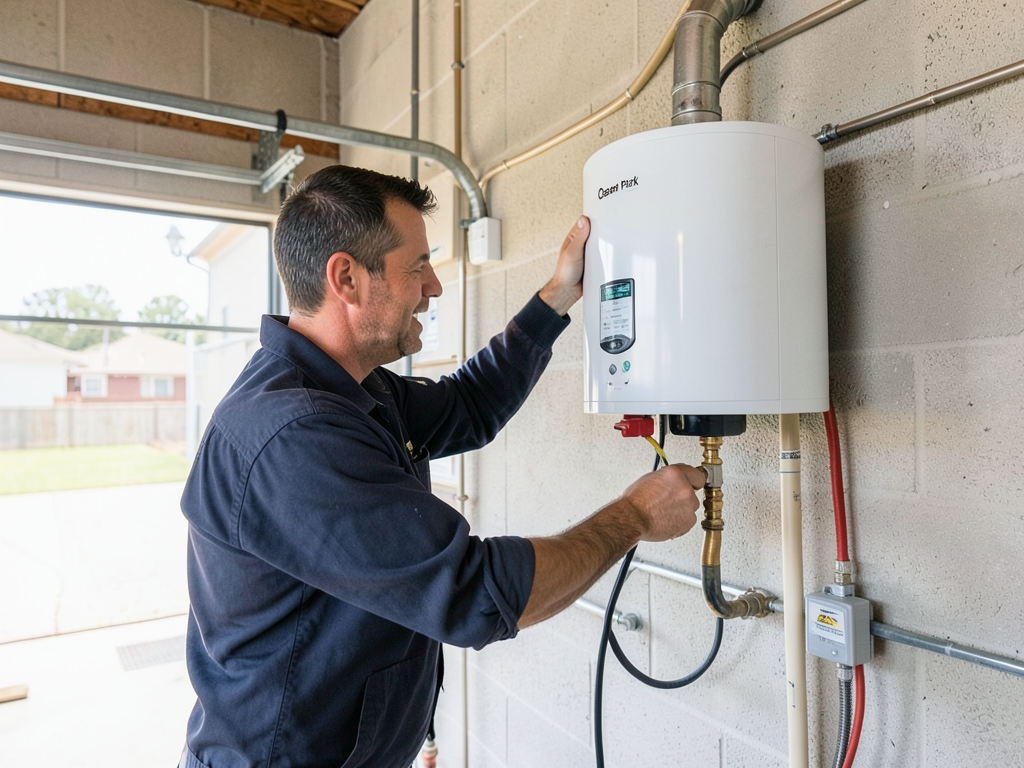
Installing a tankless water heater in Cedar Park requires compliance with Williamson County building codes and City of Cedar Park permitting processes. Gas-fired units need proper Category III stainless steel venting rated for high-temperature exhaust while electric models require dedicated 240-volt circuits.
Most tankless installations need gas line upgrades since these units require higher BTU inputs than traditional tanks. A typical 199000 BTU tankless unit needs a minimum 3/4 inch gas line while older homes often have only 1/2 inch lines installed. The upgrade alone can add $500 to $1200 to installation costs.
Venting requirements include maintaining proper clearances from windows doors and air intakes. Horizontal vent runs must slope back toward the unit to prevent condensate pooling. All installations require permits and inspections through the City of Cedar Park Building Inspections department ensuring compliance with National Fuel Gas Code requirements. EPA energy efficiency estimates.
Cost Comparison: Tankless vs Traditional Water Heaters
| Factor | Tankless Unit | Traditional Tank |
|---|---|---|
| Unit Cost | $1200 – $2500 | $400 – $900 |
| Installation Cost | $1500 – $3000 | $800 – $1500 |
| Life Expectancy | 20+ years | 8-12 years |
| Annual Energy Cost | $150 – $250 | $300 – $500 |
| Space Required | Wall-mounted 2 sq ft | Floor space 16+ sq ft |
The higher upfront costs of tankless units can be offset by energy savings over time. A family of four using 85 gallons daily might save $150 to $250 annually on utility bills. Over a 20 year lifespan this could total $3000 to $5000 in energy savings potentially offsetting the initial investment.
Choosing the Right Tankless Water Heater for Your Home
Selecting the appropriate tankless unit requires calculating your household’s peak hot water demand in gallons per minute. A typical Cedar Park home needs 5 to 7 GPM for simultaneous shower dishwasher and laundry use while larger homes might require 9 to 11 GPM units.
Climate affects performance since groundwater temperatures in Central Texas average 65 to 70 degrees Fahrenheit. This requires less temperature rise than colder northern climates making tankless units more efficient here. Most homes need units capable of raising water temperature by 45 to 50 degrees Fahrenheit.. Read more about Affordable Plumbers in Round Rock for Fast Water Heater Repairs and Replacements.
Condensing vs non-condensing models present another choice. Condensing units achieve 95 percent efficiency by capturing heat from exhaust gases but cost $300 to $500 more. Non-condensing units run 80 to 85 percent efficient and work well for most Cedar Park homes without complex venting requirements.
Popular Tankless Water Heater Brands for Texas Homes
| Brand | Best For | Warranty | Average Cost |
|---|---|---|---|
| Rinnai | Largest homes | 12 years | $1800 – $2500 |
| Navien | Energy efficiency | 15 years | $1600 – $2200 |
| Rheem | Budget friendly | 12 years | $1200 – $1800 |
| Stiebel Eltron | Electric only | 7 years | $800 – $1400 |
Rinnai leads the market for whole-house applications offering models from 7 to 11 GPM suitable for Cedar Park’s larger homes. Their Wi-Fi enabled units allow temperature control through smartphone apps providing convenience for busy families.
Navien specializes in ultra-high efficiency condensing units with built-in recirculation pumps eliminating the cold water sandwich effect common in tankless systems. These units maintain hot water at fixtures reducing wait times during morning routines.
Step-by-Step Tankless Water Heater Installation Process
- Site Assessment
Technician evaluates existing plumbing gas lines and electrical capacity determining necessary upgrades for proper installation.. Read more about Local Pflugerville Plumbing Experts for Gas Line Leak Detection and Repair.
- Permit Acquisition
City of Cedar Park building permit obtained including inspection scheduling for final approval.
- Gas Line Modification
Existing gas lines upgraded to meet BTU requirements with proper shutoff valves installed.
- Mounting and Venting
Unit securely mounted to wall with Category III venting routed per manufacturer specifications.
- Plumbing Connections
Hot and cold water lines connected with isolation valves for future maintenance.
- Electrical Integration
Control wiring and power connections completed with proper surge protection.
- Testing and Calibration
System tested for leaks proper combustion and optimal temperature settings.
- Final Inspection
City inspector verifies code compliance before unit activation.
The entire installation typically requires 6 to 8 hours for a straightforward replacement though complex gas line modifications can extend the timeline. Most homeowners experience hot water availability within 24 hours of starting the project.
Maintenance Requirements for Long-Term Performance
Tankless water heaters require specific maintenance to combat Cedar Park’s hard water conditions. Annual descaling prevents mineral buildup in heat exchangers while checking the inlet filter removes sediment that restricts flow. Most manufacturers recommend professional maintenance every 12 months.
The descaling process involves circulating a food-grade acid solution through the heat exchanger to dissolve mineral deposits. This typically takes 2 to 3 hours and costs $150 to $300 depending on unit accessibility. Homes with water softeners might extend this interval to 18 to 24 months.
Cleaning the combustion chamber and checking venting for obstructions ensures safe operation. The condensate drain line requires periodic flushing to prevent algae growth and clogs. Digital controllers need occasional firmware updates to maintain optimal performance and error code diagnostics.
Energy Efficiency and Environmental Benefits
Tankless water heaters contribute to reduced energy consumption through their on-demand heating design. Unlike storage tanks that maintain 40 to 50 gallons of hot water continuously tankless units activate only when hot water is requested eliminating standby heat loss.
EPA estimates show tankless units can reduce water heating energy use by 24 to 34 percent for homes using less than 41 gallons daily. Cedar Park homes with typical usage patterns see savings of 27 to 30 percent annually translating to 1000 to 1500 kilowatt hours saved per year.
The space-saving design allows installation in compact areas freeing up floor space previously occupied by bulky tanks. This vertical mounting also reduces the risk of water damage from tank failures which can release thousands of gallons if a bottom rusts through.
Common Issues and Troubleshooting Tips
Tankless water heaters occasionally display error codes indicating specific problems. Code 11 signals ignition failure often caused by gas supply issues or dirty flame sensors. Code 90 indicates blocked venting while code 99 shows heat exchanger overheating from restricted water flow.
Hard water scaling causes the most frequent performance issues. Reduced hot water temperature or fluctuating temperatures suggest heat exchanger deposits are forming. The unit may cycle on and off rapidly as scale insulates the heating surfaces reducing heat transfer efficiency.
Freeze protection requires electricity even when the unit is not actively heating. During winter power outages units can freeze and crack if temperatures drop below 32 degrees Fahrenheit. Some homeowners install battery backup systems to maintain freeze protection during outages.
Frequently Asked Questions
How long does a tankless water heater last in Cedar Park?
With proper maintenance and annual descaling most tankless units last 15 to 20 years in Cedar Park’s hard water conditions. Units without water softeners may need heat exchanger replacement around year 7 to 10 extending overall lifespan to 15 years.
Can a tankless water heater handle multiple showers at once?
Most whole-house tankless units handle 2 to 3 simultaneous showers depending on groundwater temperature and desired output temperature. A unit rated for 8 GPM at 70 degree rise typically supports two showers plus a dishwasher running concurrently.
What happens during a power outage?
Gas-fired tankless units with pilot lights continue working during power outages though electronic ignition models require electricity. All tankless units need power for controls and safety systems. Electric models cannot operate without power.
Are tankless water heaters worth the investment?
Tankless units typically pay for themselves through energy savings within 5 to 7 years for households using 85+ gallons daily. The longer lifespan and space savings provide additional value though the break-even point extends to 10+ years for low hot water users.
Do tankless water heaters require special venting?
Yes gas-fired tankless units require Category III stainless steel venting rated for high-temperature exhaust. Venting must maintain proper clearances from windows doors and air intakes with specific termination heights based on installation location and local building codes.
Making Your Decision: Is Tankless Right for Your Cedar Park Home?
The choice between tankless and traditional water heating depends on your household’s specific needs and priorities. Tankless units excel for large families with high hot water demand and homeowners planning to stay in their homes long-term. The energy savings and endless hot water justify the higher upfront costs for many Cedar Park residents.
Consider your home’s gas line capacity existing venting and water quality when making this decision. Homes with 1/2 inch gas lines may need expensive upgrades while properties with severe hard water require additional filtration systems to protect the investment.
Professional assessment helps determine if your home’s infrastructure supports tankless technology and what modifications might be necessary. The City of Cedar Park requires permits for all water heater replacements ensuring installations meet current safety standards and building codes.
Ready to upgrade your water heating system? Call (737) 316-0588 today to schedule a consultation and learn if a tankless water heater makes sense for your Cedar Park home. Our licensed technicians will evaluate your specific needs and provide a detailed quote with no obligation. For more information, visit National Fuel Gas Code requirements.
Don’t wait until your old tank fails during a busy morning. Contact us now to explore tankless options and start saving on your energy bills. Call (737) 316-0588 or visit our website to book your appointment online.